Between Certainty and Chaos: Three Uncertainties Shaping Retail in 2026
I have no doubt: Retail is the most fascinating industry that is. After 30 years in retail and five years working professionally with the future, I feel this more strongly than ever. Retail has it all: traditional brick-and-mortar, technology adoption at the edge of innovation, emotions, branding and communication. On top shopping centres are the pinnacle of retail combining B2B with B2C and asset management. There is no business like Retail business.
At the beginning of a new year, it makes sense to open the fan and look ahead. Not to predict, but to understand what may influence the industry in the years to come, starting with 2026. In the old days, almost 80% of our retail sales took place in malls, and they have become a symbol of consumerism and physical retail hubs over the years. But times are changing.
In this time of the year media is full of predictions. Analysts, thought leaders, experts, and even astrologers are offering their forecasts for the year ahead. People who work professionally with the future don’t do that. We know that the future can’t be predicted. And that predictions are wrong by default. We explore it systematically and divide the future into three dimensions of probability:
- Megatrends These are the long-term, global forces that shape the future across industries and societies over decades. To be classified as a megatrend, a development needs to be sure. They are assumed to happen with a probability of nearly 100%.
- Uncertainties These are critical factors that will shape the future but could evolve in fundamentally different ways. In futures studies, they are often described as bipolar developments: either this, or its opposite. Therefore, their probability is 50%.
- Black swan events These are rare, unexpected shocks with massive impact, only explained after they occur. Think of the Global Financial Crisis (2008), the Arab Spring (2010–2012), COVID-19 (2020), or Russia’s invasion of Ukraine (2022). Their impact is enormous, but their probability low, below 5%.
When I look ahead one or two years, I find uncertainties the most fascinating. Especially the thin line between what we consider certain and what in reality isn’t. Electric cars as an example. Is their rise inevitable, or is it still uncertain? For business, this distinction is fundamental. If you treat an uncertainty as a certainty, your strategy becomes obsolete the moment reality moves in the opposite direction.
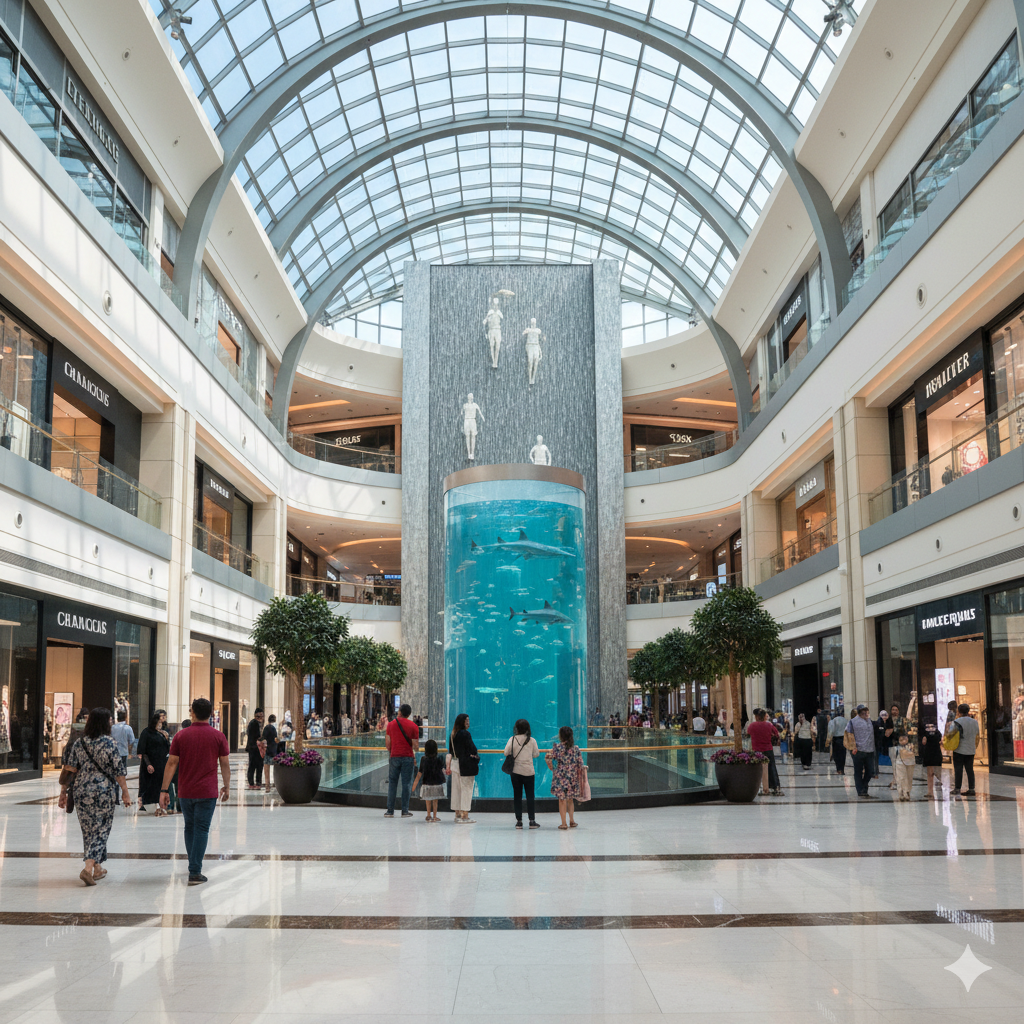
"There is no business like Retail business... [it is] technology adoption at the edge of innovation, emotions, branding and communication."
Over the holidays, I reflected on uncertainties more than ever. And on their flip sides. It feels like we are in a perfect storm where very little is predictable. Yet ideologies often disguise uncertainties as absolute truths.The list of uncertainties affecting retail and business in general is longer than ever. Here are my Top 3 uncertainties for 2026. The ones I believe are most crucial to track:
- Donald Trump – prosperity and peace or chaos? Will he manage to end the wars in Ukraine and the Middle East and bring economic growth to the world? Or will he dismantle Western democracies? And if so, into what new geopolitical order? Maybe the mid-term elections in November will hint us the direction.
- AI – will the hype continue or will a deployment-gap emerge and a bubble burst? The hype around AI is immense. On the retail floor we already see electronic toothbrushes with “AI inside”. In financial markets the bet on AI is enormous. Will it live up to expectations, or will we see a significant correction like the dot-com-collapse in 2000-2002? And AI get a “normal” development as the internet did?
- Media and Information - can we still tell truth from fiction? In an AI-driven media environment, the line between real and fake is becoming dangerously thin. AI tools do not check facts. How will leaders distinguish truth from fake? And what will trustworthy leadership look like when the truth itself is under pressure?
Uncertainties aren’t just intellectual debates. And from a futures perspective, uncertainty isn't something bad. It just means we don’t know if it moves this or that way.
Uncertainties are at the same time opportunities! And what history tells us, is that winners are those that grasp opportunities first. And those who miss them, or react too late, are punished. In futures studies, uncertainties are used to build scenarios. Not to speculate, but to bring structure to thinking and improve decisions made today. To seize opportunities, to create the future rather than wait for it.
This is what we call Strategic Foresight.
It has become my passion. Because done well it closes the gap between academic futures studies and real business. It turns future insight into clearer choices, stronger positioning, and ultimately into sustainable success. Meaning higher market shares, sales and profits.
Peter Thommen
Connect with meMore About the Author
Peter Thommen is a former IKEA executive and a veteran in strategy development, strategic foresight and global business services. With a career spanning three decades and multiple continents, Peter specializes in getting (retail) organizations ready for the future, and establish true sustainability – for people, for the planet, and for business. As a long-standing member of the Copenhagen Institute for Futures Studies, he bridges the gap between futures studies and reality to help businesses thrive in an accelerating world.