
Why specialized training for the modern mall manager is essential
Why specialized training for the modern mall manager is essential
Shopping malls are no longer just places to buy goods. They are multi-million and, increasingly, multi-billion-dollar investments that have transformed into complex, multi-functional lifestyle community hubs that combine retail, entertainment, dining, and digital experiences. The owners of these massive ecosystems require people with a very particular set of skills—skills usually only acquired over a very long career—to protect and grow their investments. Without formal, continuous training, mall managers can struggle to keep up with the changing face of the retail property industry and to balance the competing demands of landlords, diverse retail tenants, and modern consumers. This makes ongoing professional development training essential for protecting asset value, maximizing revenue, and ensuring operational safety.
Much has been said of ecommerce killing the mall; effectively clicks killing bricks. While there is some truth in this (in the US in the 1980s there were some 2,500 enclosed malls, with estimates indicating that fewer than 900 remain operational today), the internet cannot be solely blamed. Successful malls, in addition to boasting obvious advantages like a primelocation and a great tenant mix, have supported their tenants by combining the physical with the digital. This ‘phygital’ landscape relies on innovation, investment, and, above all, knowledge.
Mall managers rarely come ready-made and fully equipped for the challenges of retail property; instead, they tend to evolve into the role over time—but many malls cannot wait. There is little in the way of apprenticeships in the industry, and most managers will have developed their general management experience as former commercial facility managers, as retailers, or, as I have often encountered, from a military logistics background. As such, mall managers are a unique breed of professional working in an industry that is advancing rapidly, with shareholders demanding ever-greater returns on their investment.
Therefore, a mall manager must acquire specialized and ongoing retail property training from the wider international industry to make a significant contribution to a mall's success.
Shopping malls are no longer just places to buy goods. They are multi-million and, increasingly, multi-billion-dollar investments that have transformed into complex, multi-functional lifestyle community hubs that combine retail, entertainment, dining, and digital experiences. The owners of these massive ecosystems require people with a very particular set of skills—skills usually only acquired over a very long career—to protect and grow their investments. Without formal, continuous training, mall managers can struggle to keep up with the changing face of the retail property industry and to balance the competing demands of landlords, diverse retail tenants, and modern consumers. This makes ongoing professional development training essential for protecting asset value, maximizing revenue, and ensuring operational safety.
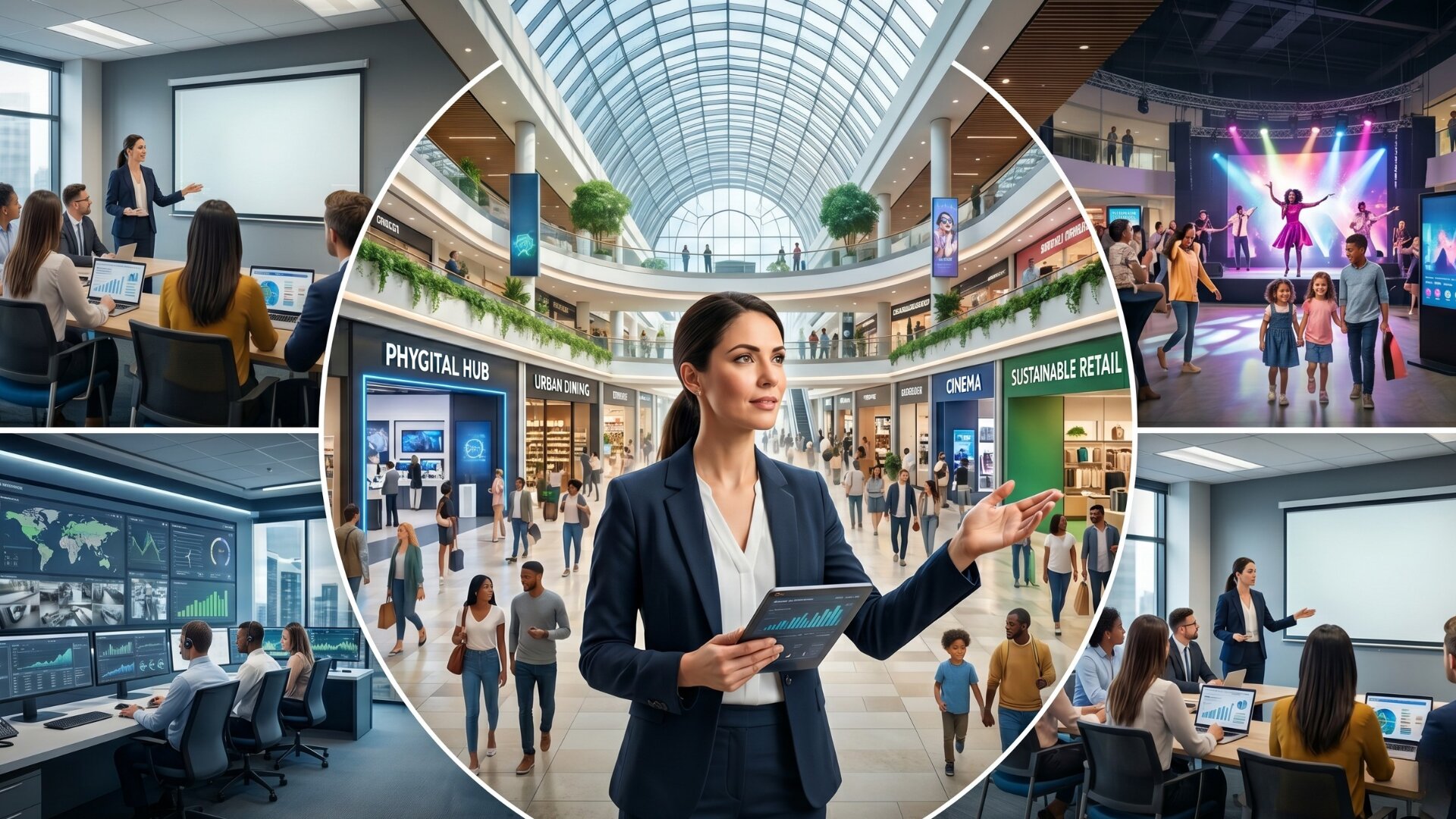
Understanding the evolution of commercial leases, interpreting retail analytics, and mastering conflict resolution are vital to accurately evaluating tenant performance, optimizing product categories, negotiating fair leases, and directly boosting the property's overall financial valuation.
Modern consumers expect seamless, engaging, and memorable physical experiences. Introducing mall managers to international case studies about the latest data-driven insights for consumer behavior, marketing strategies, and event planning will help equip them with the tools to transform a standard retail property into a vibrant destination that attracts consistent foot traffic and extends visitor stay times.
"Today’s mall manager has to be a facility manager, a customer experience expert, a hotel maître d, an entertainment specialist, a marketeer, an accountant, a digital administrator and a place maker."
A mall's success relies principally on the profitability of its tenants; therefore, the primary role of the mall manager is to support the growth of retailer sales. Mall revenue is directly tied to retailer success through percentage rent clauses and tenant retention. When retailers thrive, the entire mall ecosystem stabilizes and remains profitable. Consequently, the mall manager must keep abreast of the challenges facing retail, hospitality, and leisure, including the evolution of retail trends, technology, and customer behaviour, to develop plans and strategies to support them.
Malls also feature highly complex physical infrastructure, from advanced climate control to heavy-duty electrical grids. The transformation of many schemes into green malls and smart malls demands that the mall manager understand these initiatives and know how to leverage them to ensure their asset remains highly competitive. Comprehensive training ensures managers stay updated on the evolution of their industry and remain well-equippedto run efficient daily operations, reduce overhead costs, and handle emergencies calmly and legally.
Today’s mall manager has to be a facility manager, a customer experience expert, a hotel maître d’, an entertainment specialist, a marketeer, an accountant, a digital administrator, and a place maker. Many professions, including surveying, healthcare, and technology, require continuous professional development to remain qualified and skilled. Today’s shopping malls require nothing less.
More About the Author
Lance Stanbury is an international retail property management consultant, lecturer, and executive with over 25 years of experience in managing and launching large-scale shopping malls, implementing management solutions for existing malls and delivering mall management leadership courses internationally.
He is the founder and CEO of the UK-based firm Mall Consultants Ltd and originator and Principal of the Mallology® academy. Mallology® is a professional, online e-learning platform and Continuous Professional Development (CPD) accredited training program designed for shopping mall professionals.