
Why are you still designing brand strategy for survival instead of sustainable profit?
Why are you still designing brand strategy for survival instead of sustainable profit?
The retail landscape is no longer a battle of inches; it is a war of relevance. For years, brands have thrived in a "comfortable middle," relying on moderate pricing and general appeal to sustain growth. However, as economic pressures mount and consumer habits shift, that middle ground is rapidly evaporating. Today’s shoppers are moving with ruthless deliberation, forcing a binary choice upon every label: become a meaningful part of their identity or become a discounted commodity.
Many leaders are unknowingly designing for survival—chasing the next transaction through constant promotions and reactive discounting—rather than building for sustainable profit. This "survival mode" might keep the lights on this quarter, but it erodes the very value that keeps a brand alive in the long run.
In the following article, Ghalia Boustani, Ephemeral Retail Specialist and author, explores why "meaning" has become the most critical design criterion in modern retail. By shifting focus from relentless acquisition to deepening existing relationships and auditing true brand perception, leaders can move beyond the cycle of leftovers and begin competing for genuine desire.
“Sustainable profit follows value. Value follows meaning. And meaning has to be designed with intention, not retrofitted into the quarterly deck after the numbers disappoint.”
The fashion and retail industry has reached a decisive inflexion point, and most brand leaders are still playing the wrong game.
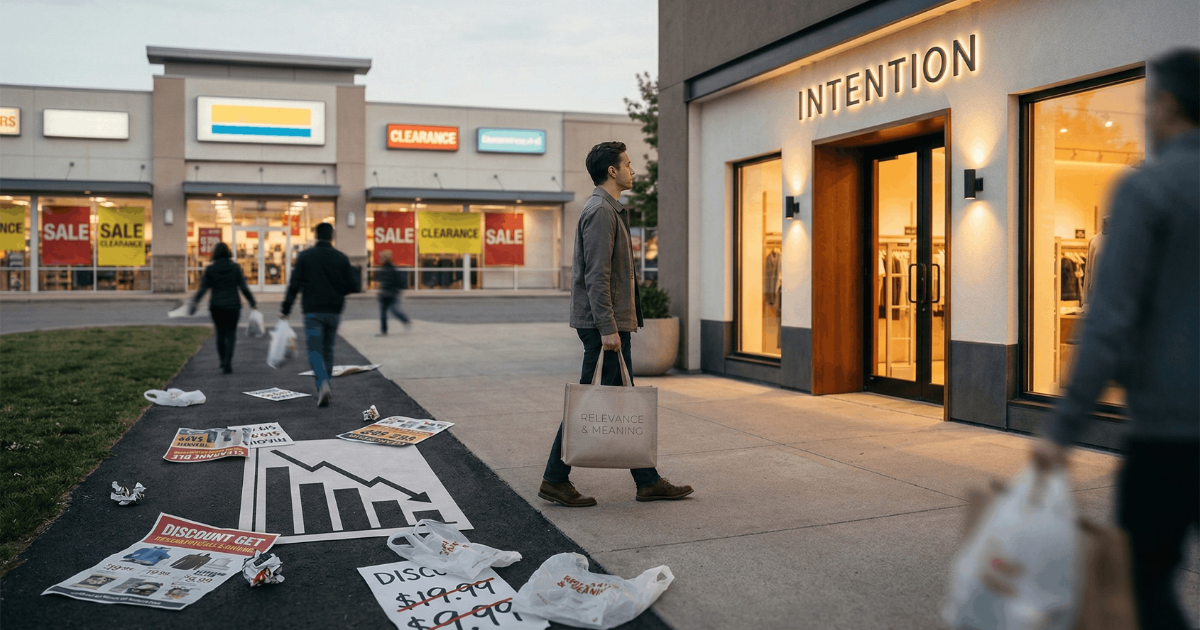
Today’s customers are not confused. They are ruthlessly deliberate. Either they desire something, a piece that means something, that reflects who they are, or they default to a commodity, buying whatever fits at the lowest price. The comfortable middle is gone. Brands that live there are not safe. They are simply slow to disappear.
The uncomfortable truth is that most retailers are designing a strategy for survival, not sustainable profit. Survival thinking chases transactions. It discounts, promotes, and reacts. Sustainable profit thinking builds something more durable: value that lives in the customer's mind long before she ever opens the app or walks into the store.
When everything becomes expensive, outlets, fast fashion, and mass brands, customers don't stop buying. They edit. They choose one or two pieces that mean something and cut everything else. The brands that win that edit are not the cheapest or the most premium. They are the ones that have consistently answered one question: Does buying this make me feel like a better version of myself?
If your brand cannot answer that question clearly, you are not competing for desire. You are competing for leftovers.
Here are three recommendations every brand leader should act on now:
1. Audit what your brand actually means to your best customers, not what you think it means. Run structured conversations with your top 10–15% of customers. Not surveys. Real conversations. Ask them why they chose you over the alternatives, what they would genuinely miss if you disappeared, and what they wish you did better. The gap between what they say and what your current brand strategy assumes is your most urgent strategic problem.
2. Stop allocating the majority of your marketing investment to acquisition and put a meaningful share into deepening the relationship with existing customers. Most retail brands spend 70–80% of marketing budgets chasing new customers while their most profitable ones quietly drift. Loyal customers have already told you they find value in what you do. Invest in making that value more visible, more personal, and more consistent across every touchpoint. The return on investment will outperform acquisition campaigns in any compressed economic environment.
3. Make “meaning” a design criterion alongside margin and sell-through. Every product brief, every campaign, every store experience should answer a single forcing question before it gets approved: Does this build or dilute how our customer sees herself when she chooses us? If your teams cannot answer it, the brief is not ready. Integrate this question into your creative review and commercial planning process. Meaning is not a marketing afterthought; it is a profit driver that your competitors are not yet measuring.
Sustainable profit follows value. Value follows meaning. And meaning has to be designed with intention, not retrofitted into the quarterly deck after the numbers disappoint.
The brands that internalize this shift now will not just survive the current climate. They will own the next one.
More About the Author
Ghalia Boustani is an Ephemeral Retailing Specialist, published author, and podcast host with a strong focus on flexible retail models, experiential spaces, and urban commercial strategy. Her work bridges research and practice, helping brands, landlords, and destinations rethink how physical retail can adapt to changing consumer behaviours and market dynamics. Through writing, consulting, and conversations with industry leaders, she explores how temporary, hybrid, and adaptive retail formats create long-term value in a rapidly evolving landscape.