
A gift card is not a product — it is a growth engine
The logic behind gift cards and vouchers has been around for a very long time. At its core, it is nothing more than a form of credit or balance held with a specific company. For instance, when you return a garment you’ve purchased, you receive credit to be spent in the future. Yes, that is the basic logic, and for many businesses, staying at this level is satisfactory. Some companies have, of course, taken this to the next level by digitalizing the process, but the fundamental principle remains the same. It is an exchange of cash for a beautiful gift card (physical or e-card, though it’s rare to find providers offering both), with the entire process digitalized to allow for partial, successive spending.
Implementing this in shopping destinations, however, is significantly more demanding because of the variety of different businesses operating within a single location. This is why many centers today still don’t offer gift cards at all, or they only provide paper vouchers that must be spent in a single transaction at a single store. You would be surprised how many providers still operate this way—even in an era where digitalization is a "must" and customers are increasingly demanding a superior user experience (UX). Such a limited offering certainly discourages future use, let alone inspiring a customer to buy and gift a card to someone else.
Don't get me wrong; I personally prefer buying a specific gift when I know the recipient will truly love it. But what happens when you don’t know? You leave the decision to the recipient. Let them choose what they want. In such cases, destination gift cards (of any kind) are truly an excellent choice.
"The Customer is King"
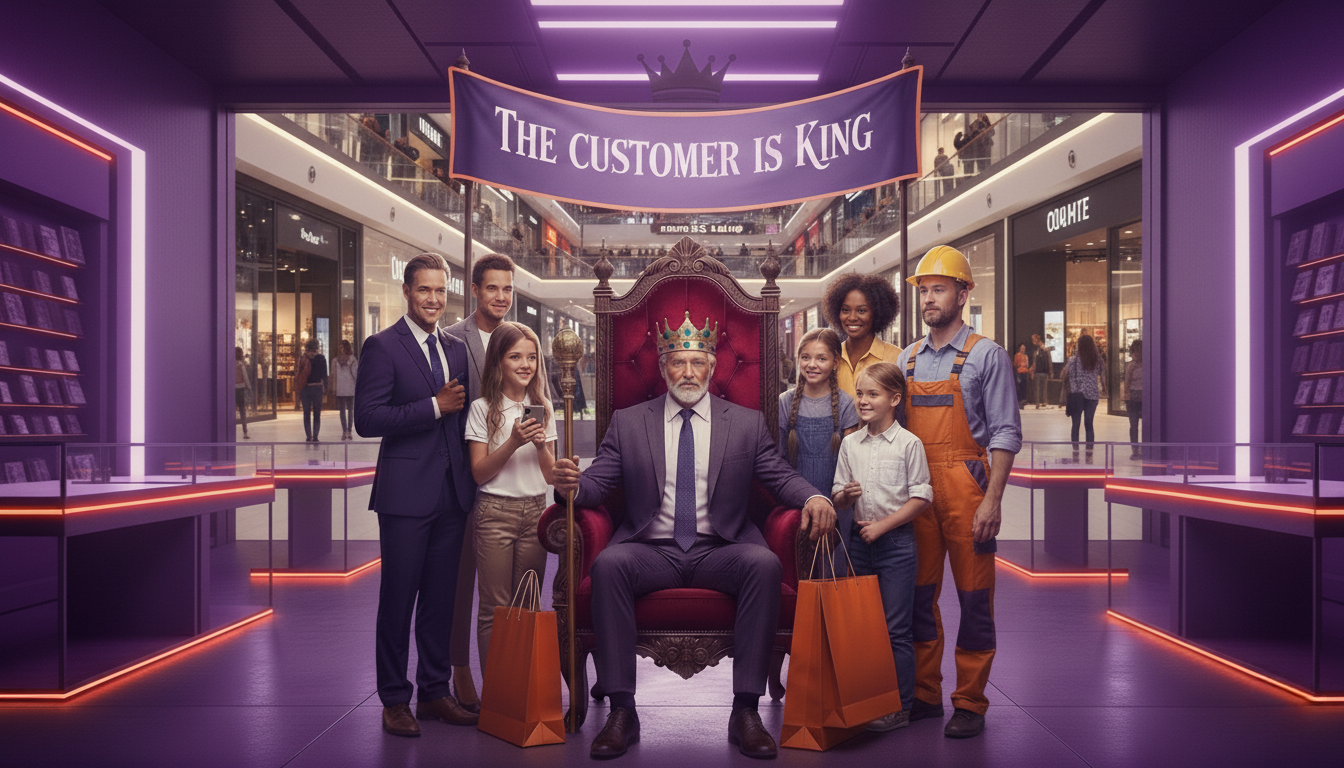
This is a well-known slogan, yet it is still so rarely felt in practice. I am speaking about the average market, not high-end luxury where Customer Experience (CX) is naturally the top priority. But customers must be won over. And what is the best advertisement? A great user experience combined with a sense of comfort and ease—the feeling that you are heard and that there is a sense of unity within a shopping destination. This becomes the ultimate lever that encourages someone to buy and give a gift card. Would you give one if you knew the experience wasn't up to par? Likely not, unless you were in a great rush making a last-minute purchase.
There are two perspectives here: the eyes of the customer and the eyes of the issuer.
From the customer's perspective, the user experience is paramount. What do you think they prefer: a paper voucher that must be spent in one shop in its full amount, or a personalized gift card featuring a photo of a special place or event that means a lot to the recipient? A card they can add to their mobile payment wallet, spend the balance successively, and see their remaining balance displayed after every transaction—without having to check online or at an info desk. Imagine receiving a card, scanning a code with your phone, and a video opens with a personal greeting. The user experience is quite different, isn't it?
"A gift card is not just a substitute for cash; it is a powerful marketing tool for attracting new visitors and rewarding them for a variety of purposes."
From the issuer's perspective, the view can be very different. There are centers that only care about having a gift card in their portfolio as long as it costs them nothing. They don't realize what a potent marketing tool it can be. They don't want to deal with onboarding, or in the worst-case scenario, the owner refuses the initial investment because they don't understand the revenue it can generate. They don't value data and are often unaware of what can be achieved with it.
On the other hand, there are centers that recognize this potential. They invest more time into setup and onboarding, and consequently, they see sales grow by at least 30% after just one year. They hold the funds in the center's own account, customers are satisfied with the UX, and sales grow organically as a result. The wealth of data they acquire can be used successfully to understand shopping habits and predict future purchases—especially when integrated with other data points, such as footfall. As a "cherry on top," any breakage (unspent balances) remains theirs.
A gift card is a brilliant tool for attracting new potential customers. If they are satisfied with the experience, you have a much better chance of building a lasting relationship and a successful loyalty program.
Jurij Triller
Connect with meMore About the Author
Jurij Triller is widely recognized in the retail and shopping-center industry as one of the few experts who sees gift cards not as products, but as strategic business levers. As CEO of Smart Octopus Solutions (Ljubljana), he has worked with shopping centers, retail groups, and destination operators across Europe, helping them build closed-loop gift card ecosystems, loyalty platforms, and data-driven growth strategies. Within the industry, he is known not as a technology salesman, but as a strategic thinker shaping conversations about the future of retail, digital destinations, and the experience economy — and about how to turn transactions into relationships, data into decisions, and sales into long-term value.