Who let work back into my head?
Technology should give us our attention back, not create yet another place we have to check.
On the first day after a holiday, I always make the same mistake: I open my email before my first coffee. I tell myself I will only take a quick look at what awaits me. That sentence is of the same kind as: ‘We’ll just pop into Špancirfest for a little while.’ Nobody believes it, yet we keep saying it anyway.
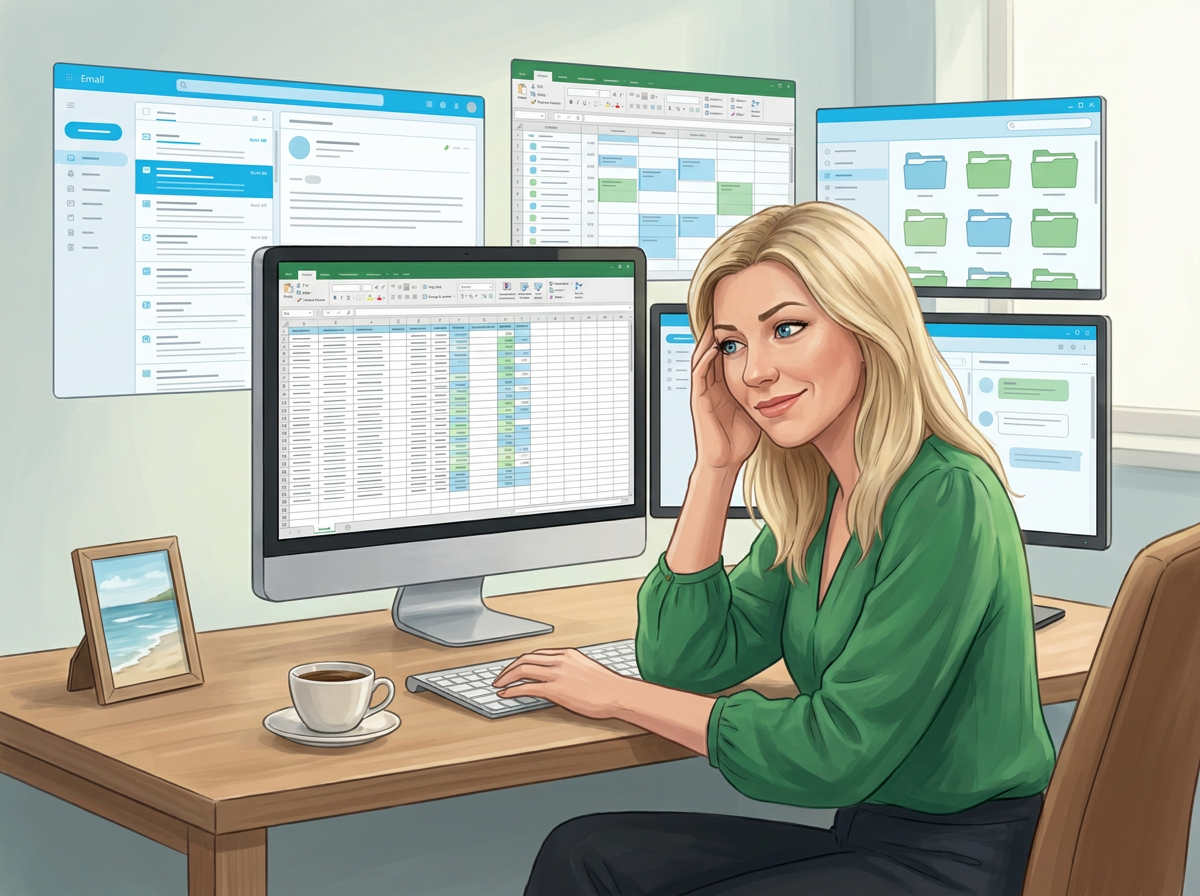
A few minutes later, I have about ten folders, three programs, two spreadsheets and several messages marked with a red exclamation mark open, even though they were sent ten days ago. I have not done anything concrete yet, and I already feel as though I need another holiday. It is not the work that tires me. It is everything around it that requires me to remember, search, check and connect.
And that is where the story of digitalisation begins for me. However much I might sometimes wish otherwise, I cannot escape it. So, over time, we have somehow learnt to function together. Something like the relationship between a daughter-in-law and a mother-in-law :-) To be clear, it is not an unconditional relationship. My condition, postulate or thesis – call it what you will – is that good technology is technology that does not demand even more of my attention. Quite the opposite: I want it to give me back some of my attention, brainpower and time.
I will also illustrate this in real time, so that it does not all remain merely theoretical. The time is the present, and the place is my home region, Zagorje.
Where I grew up, the end of summer has its own musical finale. Various local festivals … The unmissable Špancirfest, followed by the Krapina Festival. You know autumn is just around the corner, but there is still time to socialise and to say the familiar words: ‘We’ll just go and have a quick look.’ A sentence nobody believes any more.
And so, this year too, we somehow said goodbye to the joys of summer to the rhythm of dance – above all, to a certain lightness and playfulness, but also to the energy that summer brings with it.
This summer was a little different for my family. We took several shorter holidays. A little rest, a little planning, a little work, then more time with people dear to us, some new acquaintances, but also letting go of a few old things – habits, expectations and relationships that we sometimes maintain even though we know there is no longer any reason to do so. Summer also offers time to acquire new knowledge.
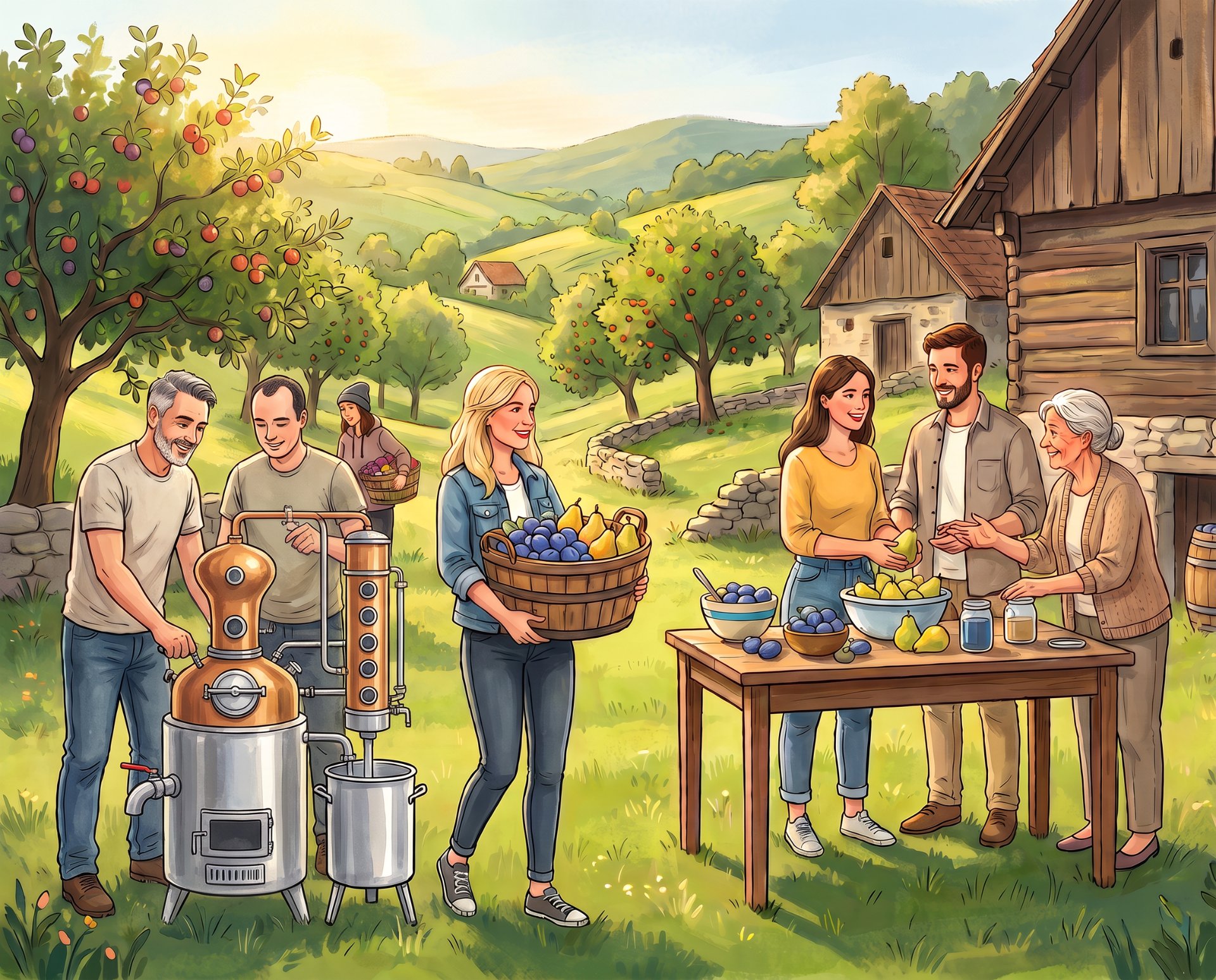
I particularly enjoy watching my husband acquire a new skill each year. As a city child, he has already mastered viticulture, grafting, storing firewood for winter and making wooden furniture. Cellar work is a more complex process and he is still learning it, while this year he devoted himself to processing fruit and producing various (non-)alcoholic derivatives. In our home, fruit rarely gets the chance to become ordinary compote.
What I love most is that time together: his curiosity, my friends’ patience, the group work sessions that turn into gatherings lasting late into the night, and the laughter that leaves us in no doubt the next day that we have abdominal muscles.
And as I watch them, my professional instincts remain active. I think about connecting processes. Someone has fruit, someone has equipment, someone has experience, and someone wants to learn. You need to know who will do what and when. Unlike us, fruit is not in the habit of saying: ‘It can wait until next week.’
Professional instincts do not go on holiday
At work, we very quickly see what happens when processes are not connected. Usually it happens to our clients, but it also happens to us. A piece of data remains in one application, a colleague looks for it and wants it in another, and someone eventually copies it into a spreadsheet or creates a third program that brings everything together. With the right tools and technology, the person who previously had to keep everything in their head and hold it all together can easily go on holiday.
That is why, after a holiday, we do not return only to a large volume of work. We also return to the same processes that tired us before we left: searching for information that already exists, checking processes and tasks, and finding out whether a colleague has completed their part.
Such tasks may not occupy space in the calendar, but they reliably occupy space in our heads. They sit there unannounced, pay no rent and speak up just as I am trying to fall asleep: ‘Did you reply?’, ‘Did the payment go through?’, ‘What about that report?’ Sometimes it is not the amount of work that tires me, but that small internal on-call duty that has never officially ended.
When technology becomes another job
Technology should help us – and it often really does. It makes information available, prevents a process from grinding to a halt when someone goes on holiday, and ensures that a customer does not have to wait for the one person who knows where something is.
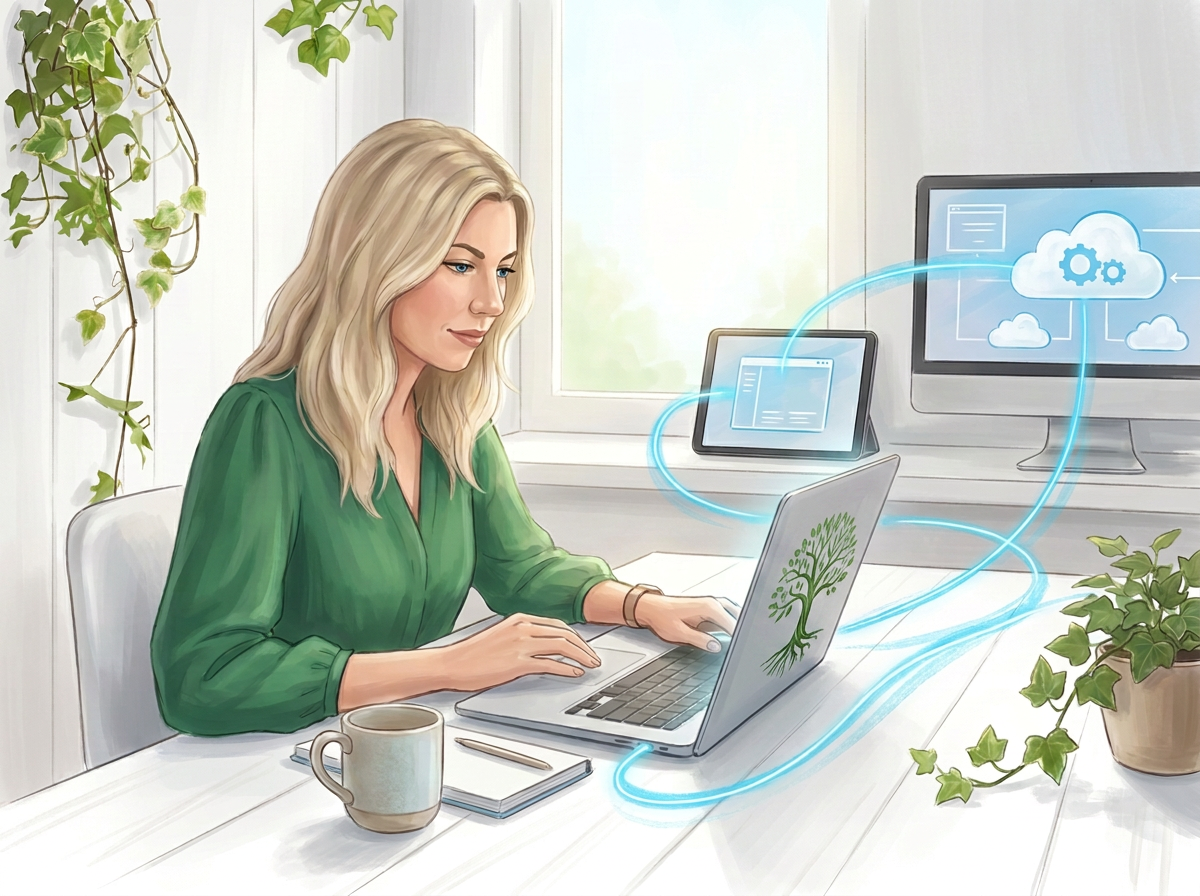
But sometimes we get yet another application, another password, another spreadsheet and another communication channel. I already have enough places where I might overlook something; I really do not need another one. Instead of technology remembering for us, we remember how the technology works. Resistance to digitalisation is therefore often not a fear of the new, but a perfectly reasonable fear that we will end up with yet another system that needs to be fed, updated and occasionally asked why it is not working again.
We should therefore not measure the value of technology solely by the number of functions or tasks it can perform. What also matters is how much of our attention it gives back to us. Good technology remembers what we do not need to remember, connects data that would otherwise remain separate, and automatically performs steps that do not require human judgement. It alerts us when something important happens, but stays quiet when everything is fine.
The best technology may be the technology I notice least. It does not ask for praise, send me a notification to say that it has successfully sent a notification, or expect me to check in with it every morning. It simply does its job and allows me to do mine.
And where am I in all this?
I can easily recognise a process that is getting stuck at work. I am somewhat less effective when it comes to myself. If I am available all day, when do I actually switch off? Have I had enough sleep? Did I eat sitting down or on the go? Did I stop working after work, or did I merely move the work to my mobile phone and swap my office chair for an armchair or, even worse, my bed?
Nor would I want to turn self-care into yet another project, complete with performance indicators, an app reminding me to breathe and a weekly report on the quality of my rest. For a start, it is enough not to wait for a holiday before spending a few days living at a pace that suits me.
Technology alone will not create a healthy relationship with work. It cannot decide what boundaries we will set or say on our behalf that something can wait until tomorrow. But it can help to recreate a little space between a message and our response: space to assess whether something is truly urgent, finish one task before starting the next, and talk to a person without looking at three other screens at the same time.
That may not look like a great digital revolution. For our health, concentration and relationships, however, it may be more important than yet another new feature.
We need not rush into autumn
After a holiday, it is easy to feel the need to catch up quickly, as though we owe someone proof that we have truly returned. But a holiday is not a debt that has to be repaid through overtime.
Perhaps, then, we should not ask ourselves how we can do more, but what we should no longer do in the same way. What do we keep repeating that could be simpler? Which commitments did we take on only because we felt uncomfortable saying no? Which information are we still searching for, even though it should be available in one place? And with whom do we genuinely want to have that coffee we have been talking about for months?
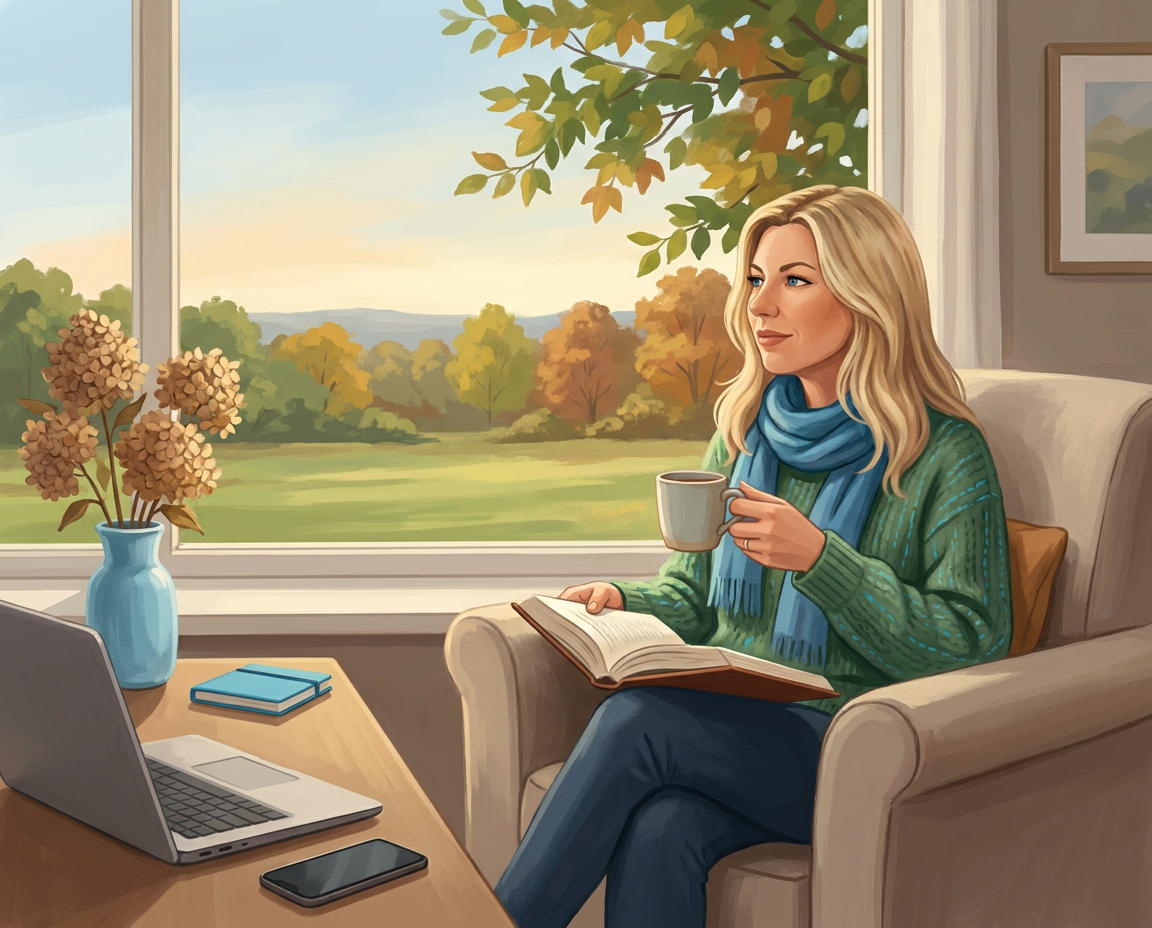
I have made up my mind. I am going into autumn with a clearer head. I want to simplify what keeps getting stuck at work, but also to connect what matters to me more closely with what I actually make time for. Arrange that coffee. Have that cocktail I have been wanting. Leave an evening free for a book. Notice that I am tired before I start becoming angry with everyone around me.
Work, decisions and messages with exclamation marks will be waiting for me. My favourites will still be the ones with ‘Resolved’ written underneath. Especially when they have been resolved without me.
In the meantime, my husband and I have arranged another short holiday next week. It is in the calendar. We have successfully connected that process. Summer will last a little longer for us. Everything else will have to fit around it.
Mila Triller