99% of Slovenians Don't Know What Life in China Is Like
Our guest this time, Denis Oštir, spent more than twenty years in journalism. He says that in his heart, he is still a journalist. Years ago, right when the Chinese giant Hisense took over Gorenje, he decided to change his career path. For several years now, he has been working for an American corporation, part of the same Chinese conglomerate, VIDAA International. Interestingly, he was the first employee of the company back in 2018. Today, he is the editor-in-chief of a platform used by millions of viewers around the world on their televisions.
We spoke with him about the peculiarities of Chinese (business) culture, the challenges of working in an international company, and the rapid progress of digitalization.
How did your cooperation with the company, which is now so closely intertwined with Slovenia, begin?
A completely new chapter in my career started when Hisense acquired Gorenje. It was the first acquisition of such size in Europe by a Chinese company. I went to Gorenje with the task of managing public relations at that time. Once the takeover was complete, I wanted to move on. The new owners, however, had already gotten to know me. They knew I had worked in television for years and invited me to join a new project. Today, I am grateful for that opportunity. Working in this international corporation has opened up countless opportunities for me---just like for many former Gorenje colleagues. Among other things, I could mention the construction of a major factory in Mexico, where Slovenian know-how played a very important role.
That was a very high-profile takeover, which caused quite a stir in Slovenia. Many people were concerned about it, especially because a once-flagship Slovenian company was acquired by the Chinese. Looking back, how do you see this story today?
Chinese companies are enormous. In Slovenia, however, we often struggle to accept foreign cultures. Of course, we must understand that a new owner will always impose their own rules. Those who managed to adapt have prospered within the group, while those who couldn't accept the changes left.
What is the work culture really like in a company owned by Chinese investors?
Our company's work culture is very Western. I'd say the owners make an effort to include best practices from various environments into work processes. Slovenians like to balance work and free time, the Chinese are extremely hardworking and project-oriented, while Americans are highly entrepreneurial. This combination delivers very strong results.
I must emphasize that our digital platform is global---available in India, South Africa, Europe, and even Alaska. That means we operate across different time zones. I might have meetings at six in the morning or at two at night. Personally, I see it as part of the nature of my job. People who work in offices, however, follow a completely normal schedule.
What role does digitalization play in your work?
Every television has its own software. We make sure that various apps run smoothly on the TV. In our company, all work processes are digitalized. That includes meetings---especially after the Covid pandemic. Still, personal meetings haven't disappeared, which makes sense given our global operations and the different cultures we engage with. In certain parts of the world---for example India and South America---you won't achieve much without face-to-face meetings. There, a contract is only concluded after a handshake.
I assume you also use artificial intelligence quite a lot in your work?
Of course. On two key fronts. On one hand, we use our own models in programming. On the other, we use AI for user recommendations. Based on preferences, our platform analyzes large data sets and suggests content it estimates the viewer will enjoy. Lately, AI assistants have also become a great feature, guiding viewers and helping them find specific TV settings.
China has recently become a superpower in digitalization. How do Chinese people perceive and accept advanced technology?
I work with younger people on my team. One of them, Kaya, has never in her life seen cash. Some of my younger colleagues have never used a credit card. These are people who pay for everything with their phones. When they want a coffee, they order and pay for it on the way to the café---and then just pick it up. Without a smartphone, it's hard to get by in China these days. Technology there is part of everyday life.
And how do Chinese companies view the customer? Do they put a lot of emphasis on building relationships with them?
Most Chinese use the WeChat app. It's a kind of "super app" that integrates many others. Within it, companies offer their own apps. There isn't a single major company in China that doesn't have some form of loyalty program. These programs are digital and proactive. That means the app tracks your habits and preferences. My wife and I even tested it during our last visit. When you return to the same coffee chain, the app immediately offers you benefits. Everything is designed to provide the best user experience based on your past purchases.
In Slovenia, there are still many stereotypes about China. Do you encounter them yourself?
People often repeat the myth that the Chinese work twelve hours a day. That's simply not true. They effectively work eight hours a day, but often stay at work for ten. Why? Because between noon and two, everyone rests. They have folding beds at the office and sleep for two hours. It's part of traditional Chinese medicine, which teaches that working when the sun is at its peak is not recommended.
Overall, I'm convinced that 99% of Slovenians have a distorted view of China. That's why I encourage readers to visit and experience it themselves. It's a huge country. If I had to recommend specific destinations: for history, Xi'an (to see the Terracotta Warriors); for business, Shenzhen; and for nature lovers, definitely Ürümqi.
Returning to digitalization in the entertainment industry---especially your field, television---what trends do you see for the future?
Today's smart TV interface still resembles a smartphone. Users browse among apps: open one, close it, open another. In other words, the user decides, and the system executes---or suggests something based on past choices.
I believe in the future we'll move toward a service more like a concierge in a luxury hotel. Such a system will recognize our needs in advance, without us having to command it. Take the hotel example: if I came alone, a great concierge would recommend a movie. If I came with my wife, he'd suggest a nearby theater performance. And not ten options---but just one. The right one. The one tailored to me. That's the future I see with digitalization and AI.
Above all, it will save time. And time, of course, is the only truly limited resource. Once lost, it can never be regained. That's why digital services of the future will primarily give time back to the user.
We've been seeing many interesting technological innovations in the news. What impressed you most during your last visit to China?
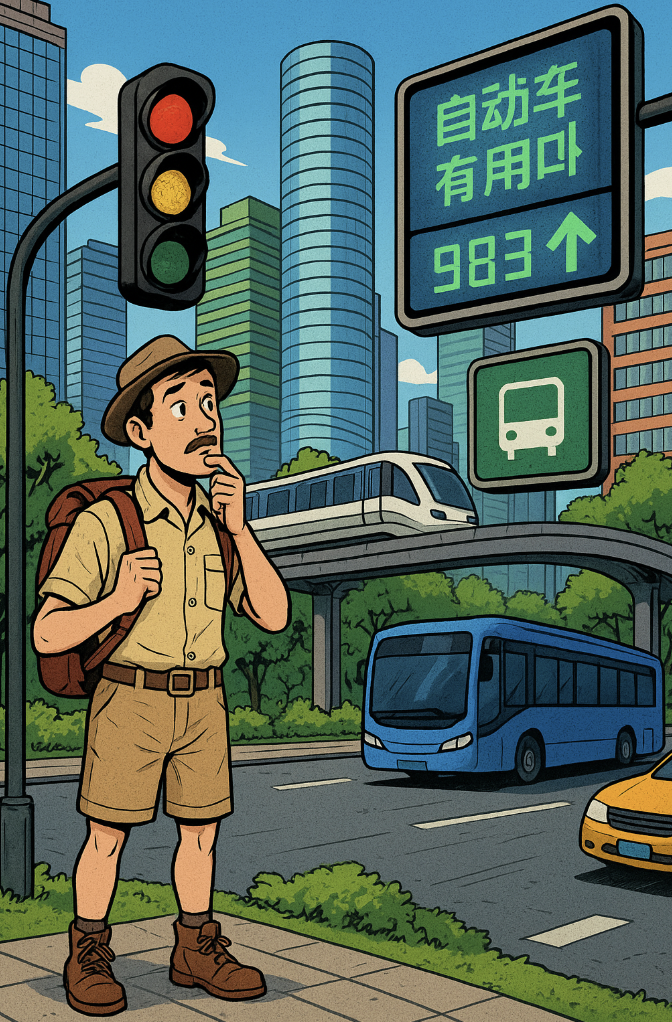
I was fascinated in Qingdao, where I saw digital traffic management in action. All traffic signs there are digital and virtual. They change in real time, according to traffic conditions. The "green wave" and flow are managed by AI, improving throughput. It's all connected to public transport and parking systems, providing an excellent user experience and, most importantly, significantly reducing congestion.
Denis Oštir
Connect with me