Is It Really That Hard?
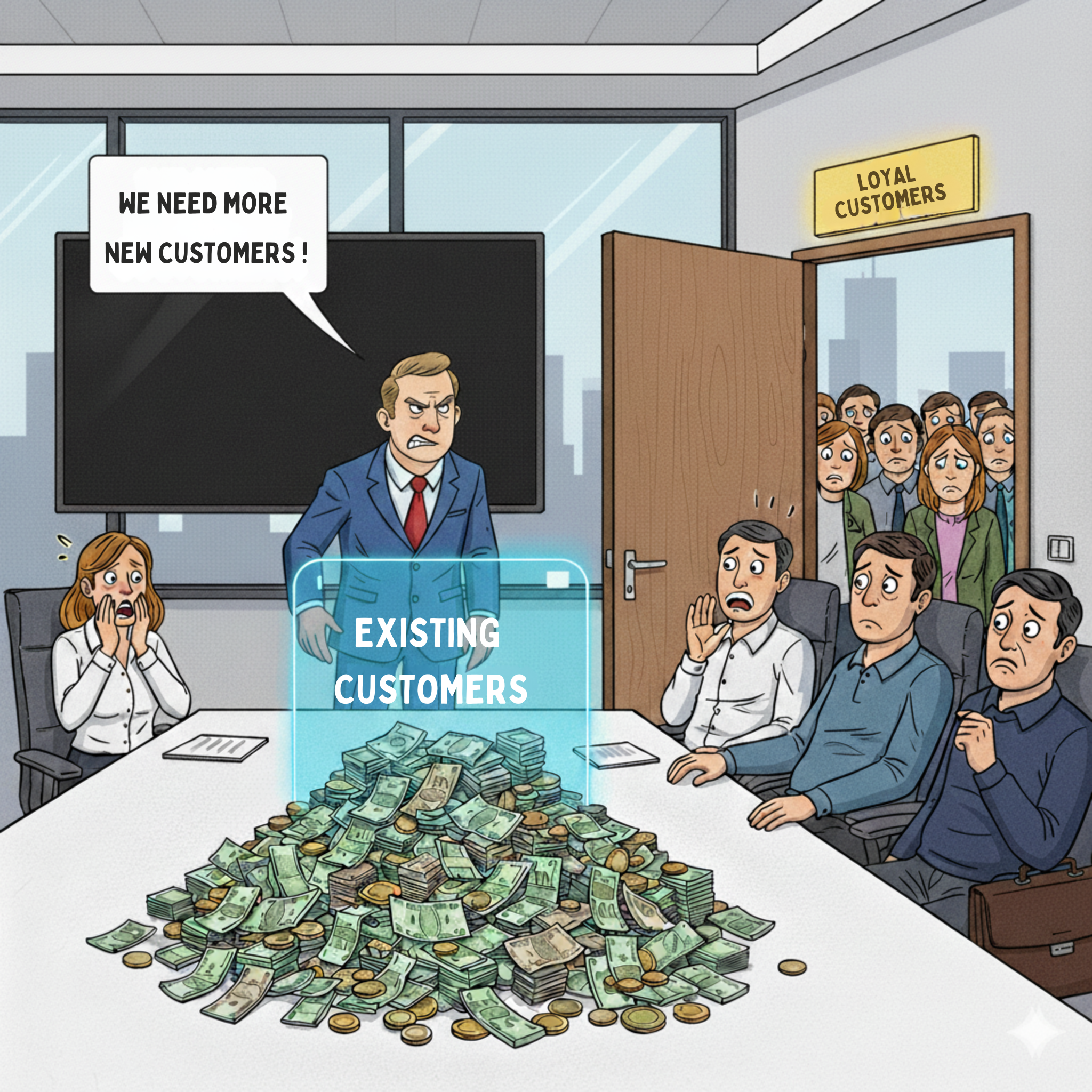
“CLV? Customer Lifetime Value? No, that doesn’t matter at all!” The CEO waved his hand dismissively, as if shooing away an annoying fly. The meeting room fell into dead silence. Department heads buried themselves in their notes while the company’s alpha and omega continued authoritatively: “Remember this. We need growth. And that means more new customers. That’s the only thing that truly matters!”
Sound familiar? Scenes like this still play out in countless companies. The result? Many focus solely on chasing new faces while old customers slowly drift away. Forgotten. Unnoticed. And with that, highly ironic situations arise. Executives, like the one from our opening, tend to forget that it’s up to five times easier to sell a product or service to an existing customer than to convince a new one (who doesn’t even know you yet). According to Bain & Company, increasing customer retention by just 5% can raise profits by 25% to 95%.
So the real question is: how much are you willing to pay for a new customer? Many entrepreneurs don’t think twice about pouring thousands of euros into ads and campaigns—often without even knowing how many clicks actually convert into paying customers.
But when someone suggests they invest €500 to keep a loyal customer (one who, on average, reliably generates €5,000 in revenue), they pull the brake and say: “€500 for loyalty? That’s way too much!”
It’s not surprising, really. Working with existing customers can sometimes feel dull. Mostly because it’s about repeated patterns. A birthday greeting. An anniversary offer. A family package at the start of vacation season. All of it often feels less glamorous than the adrenaline rush of hunting for new customers through the latest social media algorithm fad.
It’s a bit like golf. Seasoned veterans will often give you this “boring” advice when asked how to improve your score: “Play steady and consistent. Use the clubs you feel most confident with! Even if your shots are shorter, the reduced mistakes will keep your final score lower.”
Yet in both business and sports, people often prove to be their own worst enemies. The eager beginner is convinced he can escape the woods—where his ball rolled after a bad shot—through a risky 40-centimeter-wide gap in a giant thicket of branches. In golf, such gambles usually end in disaster.
It’s the same in business. Long-term success rarely comes from magical formulas but from systematic, consistent work with your existing customers.
How Much Does a Dessert Cost You?
It all begins with the right attitude. With attentiveness, friendliness, and warmth. That’s the foundation of any loyalty program. But since business ultimately lives and dies on revenue and added value, friendliness alone isn’t enough.
We must know our numbers well and ask: “How much money do I need to acquire a new customer (through ads or other means)? How much does that customer spend with us over time? How can I ensure they stay loyal longer?”
And here we often hit a wall—a certain mindset. Many entrepreneurs dismiss this aspect. The successful ones (often thanks to external circumstances) say they don’t need loyalty programs because they have enough customers already. The rest claim that gifts and perks for existing customers are just an unnecessary expense in the yearly budget.
Even though, for every euro invested in this way, they can expect at least a threefold return!
Take a restaurant, for example: how much does it really cost the owner if, on the guest’s next visit (after joining a loyalty program), they gift them a free dessert and drink? Almost nothing. Or if they prepare a special offer for local customers (who are highly likely to come back)? And then reinforce it with personalized touches. For instance, asking a guest what their favorite wine is. When that guest returns, the waiter greets them with: “Welcome back — may I bring you your favorite bottle?”
That’s when magic often happens. The guest thinks: “This restaurant really makes the effort. I absolutely have to recommend it to my friend.”
And that leads us to the best customers—the ones who come through referrals. They’re also the most loyal and generate up to 16% higher CLV (Customer Lifetime Value), according to a study from Wharton School.
A Rookie Acting Like a Master
At this point, especially if you’re from a slightly older generation, you probably remember the classic old-school hosts or waiters. They were the backbone of every good restaurant. They could instantly read a guest’s needs and approach them in a subtle, unobtrusive way. And above all, it seemed they remembered every single returning customer.
Unfortunately, such employees are rare on today’s job market—regardless of the industry. But with the right digital tools and systems, we can now create that same experience. Customers leave saying to their friends: “You know, that hotel is simply amazing. Every time I visit, it feels like they know my wishes before I even say them. Unbelievable, what a team they have! You really have to go!”
Boštjan Belčič
Connect with me