
A Gift Card Opens the Door to a New Customer. Data Helps Build Their Loyalty.
A gift card is more than a payment method. It's an opportunity to attract new customers. But how do we turn them into loyal visitors? The key lies in data, connecting businesses, and a loyalty program that offers more than discounts. The real value begins after the first purchase.
"Loyalty program" has become a convenient label for almost anything, including handing out discounts to people who would have made a purchase anyway. Points and benefits can certainly be useful. But without understanding why we have a loyalty program and what we want to achieve, we have mostly created another expense.

Gift cards are often overlooked in this context: we treat them as a payment method, even though they can be an excellent marketing tool and the first step towards a longer-term relationship.
We sell a gift card, the customer spends it, and the story ends.
Then we pay for campaigns to attract new customers. Yet we never even invited the person who was just standing at the checkout to come back. A gift card brings in a new customer and a potential loyalty club member. To give that person a reason to return, we need to understand their needs. And for that, we need data.
At the Solal Awards conference, where I participated as a panelist, the discussion raised precisely these questions: who knows the customer, who owns or controls the data, and how is that data used? Everyone sees a different part of the visitor's journey, but those pieces are rarely connected. We collect data because we have been told it matters. Yet we still end up guessing what customers want because we do not know how to use the data or what to do with it.
A Gift Card Also Brings Someone New
The journey can begin with a gift card. In most cases, the person buying it and the person using it are not the same. Someone chooses a destination, a store, or an experience. The recipient gets a reason to visit. That person may already be a regular visitor, or someone who would otherwise never have come. In that case, the gift giver has done something that marketing departments usually spend money trying to achieve: recommending a destination, whether for tourism, shopping, or experiences, and backing that recommendation with an actual amount of money.
A gift card can connect retail stores, restaurants, experiences, and other services. It can be used for personal gifts, corporate gifting, and promotional activities. But if we measure its success only by the value of cards sold, we miss an important part of the story: what happens after the sale, where the money is spent, and whether the relationship continues.
A tourism destination is bigger than a single hotel, just as a shopping destination is bigger than a single store. Visitors experience them as a whole. A shared gift card can be a tangible way to connect different businesses and service providers. Far more tangible than a group photo or a collection of offers on a website.
The Cards May Look Similar. Access to Data Does Not.
When choosing a gift card system, it matters how redemption works and what data is available. A closed-loop system, where gift cards are redeemed within an agreed network independently of banking channels, allows the issuer to have direct visibility into gift card transactions and various other data points associated with them.
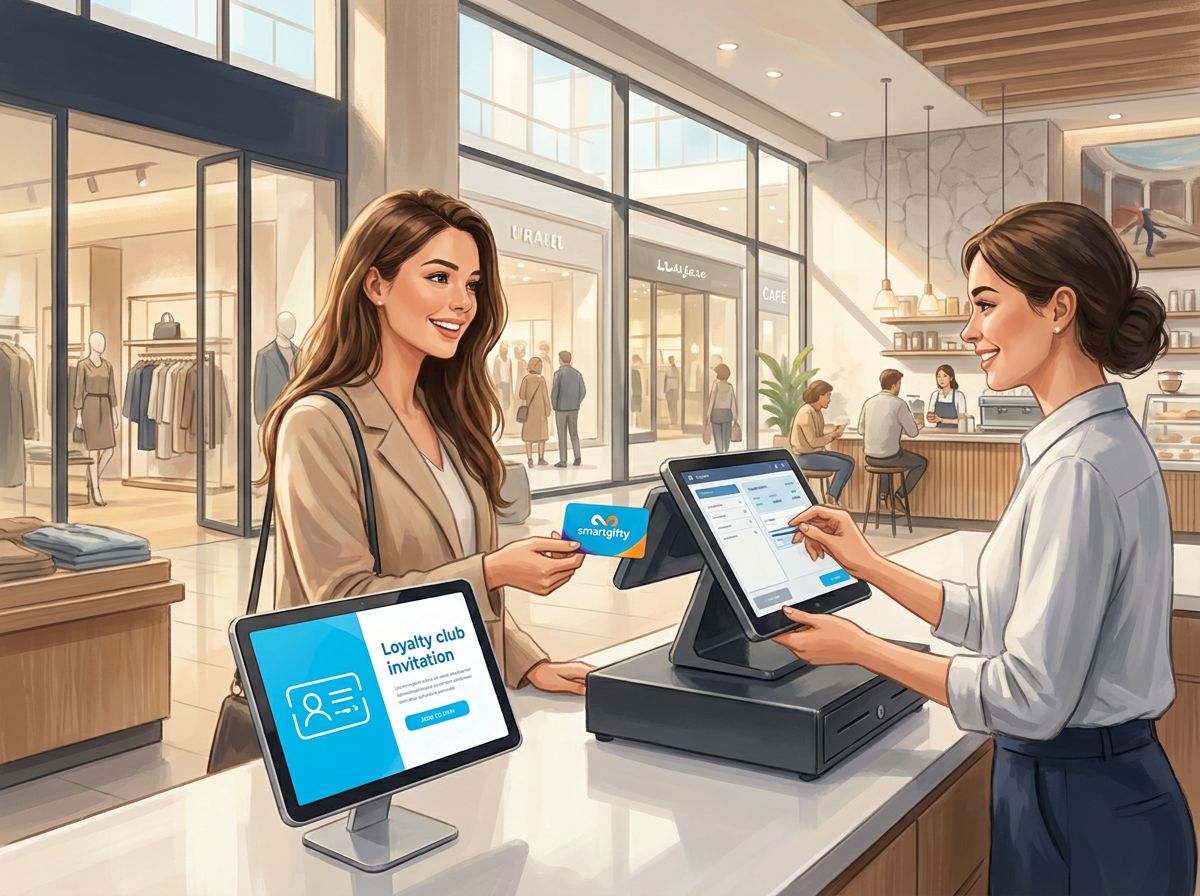
With solutions that rely on banking infrastructure, it is important to check what information the destination operator, or each individual partner, actually receives, in what format, and with what delay. The program's design, functionality, and contractual arrangements are critical. A card carrying a destination's logo does not necessarily mean that the destination has meaningful access to its spending data.
The questions to ask before making a choice are quite straightforward: can we see spending by business, time, and individual card? Can we export and compare the data and connect it to marketing activities? Or do we mainly receive information about how many cards were sold? The difference becomes clear when we look at the decisions we can make based on that information.
Understanding Spending Does Not Always Require Knowing a Name
With gift cards, we often do not know the identity of the person using them. But transaction data alone can show when a card was activated, how quickly its balance is spent, where it is redeemed, and whether spending is spread across multiple visits. This allows us to explore which businesses complement one another and how the usage of cards differs depending on their sales or promotional channels.
This still does not tell us exactly what a person bought, how much they paid using another payment method, or why they decided to visit. A card may also be passed on to someone else, so the same card does not necessarily mean the same user. Despite these limitations, this is a much more useful foundation than simply having a feeling that "December was a good month." That was hardly difficult to figure out in the first place.
There is also an important distinction between not knowing someone's name and having completely anonymous data. If transactions can be linked to an identifiable individual, their privacy must be handled appropriately. For many business decisions, however, aggregated data is enough. Planning a better campaign does not necessarily require knowing every visitor's birthday.
From Redemption to Membership
When someone redeems a gift card, a logical next step becomes possible: inviting that visitor to join the destination's loyalty or membership club. They are already there, making a purchase, and experiencing what the destination has to offer. It is hard to imagine a more natural moment to ask whether they would like to receive certain benefits in the future. Of course, joining must be voluntary and must not be a condition for using the gift.
The invitation must offer real value. What will members gain: useful information, access to events, benefits across multiple businesses, or a smoother experience on their next visit? "Give us your email address" is primarily something we want. We need to give visitors a reason to share it and explain how we intend to use it.
This also gives us a meaningful performance indicator: how many gift card users joined the club after being invited, and how many remained active later? To calculate this reliably, we need an agreed method for tracking invitations and new memberships while avoiding duplicates. The number of cards is not the same as the number of people, and a new membership does not automatically prove that it was someone's first visit to the destination.
A gift card can open the door. A loyalty program must give people a reason to walk through it again. Without a planned connection between the two, we are left with separate tools and a significant missed opportunity.
Data Must Change Decisions
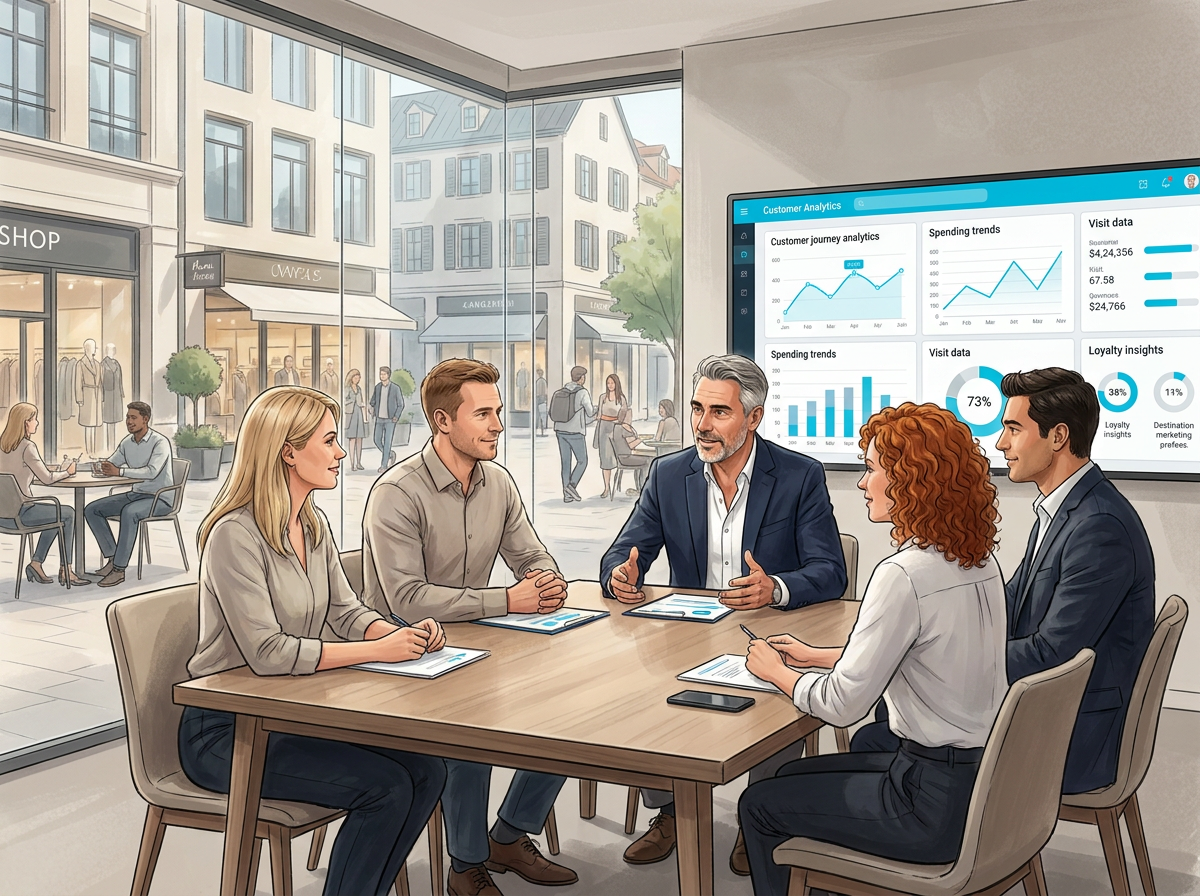
A retailer knows what customers buy in their store. A parking operator knows when visitors arrive and leave. An event organizer knows who registers. Gift card data adds visibility into part of the spending across different businesses. Bringing these insights together requires trust and clear benefits for everyone involved. Retailers will not share their data simply because someone mentioned "synergies" in a meeting. Show them how collaboration will help their business perform better.
We should not exaggerate the results either. The redeemed value of gift cards does not automatically represent incremental sales. Membership is not the same as loyalty, and more visits do not necessarily mean greater profit. If a campaign distributes gift cards, we need to assess both its cost and its impact, rather than proudly reporting the total value redeemed.
And just when we have not yet sorted out the basics, artificial intelligence enters the meeting. Of course, let's add that too. AI can help with analysis and more personalized communication. But it will not define our purpose, organize collaboration, or explain why we are offering visitors something they do not need.
The objective must be clear: attract new visitors, connect businesses, increase memberships, or encourage return visits. A gift card can be an excellent starting point for all these activities. But if we continue to treat it merely as an amount to be sold and spent, our next marketing planning meeting will once again conclude that we need new customers. Some of them have already visited us. We simply failed to continue the story.
Jurij Triller