When Safety Is No Longer Something We Take for Granted
Lately, cyberattacks are no longer something I hear about in the news and think is happening to someone else, because they have happened to people I know, to my family, and close enough to me that I can no longer think of them as just another digital threat that we all know exists.
One day, someone can no longer log in to their account; the next, someone else's files become inaccessible; then someone receives a strange message, a phishing email or a notification about a login attempt from the other side of the world. Sometimes it all begins so ordinarily that, at first, it does not even seem like something that should make us stop.
If you have never had an experience like this, and neither has anyone close to you, then you are among the lucky few, and I sincerely hope it stays that way.
Perhaps that is precisely why, over the past few weeks, I have started thinking about security a little differently. Not only about technical security, which is what we usually mean when we talk about hacking, passwords, data protection and backups, but about the feeling of safety in general and what happens when we suddenly realise just how much of our lives is stored somewhere we cannot actually touch.
Photos, documents, contracts, contacts, messages, work we have spent months or years doing, memories, communication, and sometimes even an entire business – it is all there, every day, and we have become so accustomed to having access to it that we barely think about it until, one day, perhaps we no longer do.
Last time, I wrote about how quickly work moves back into our minds after the summer, because all it takes is opening the first email and, even before the first coffee, we are back in it – deadlines, messages, meetings and things that are urgent again.
It is the middle of October, and I always feel that transition from summer to autumn before I see it on the calendar; the mornings are cooler, the light is different, after a few rainy days the smell of the earth returns, and nature seems to be slowly changing its rhythm.
We do exactly the opposite. We speed up.
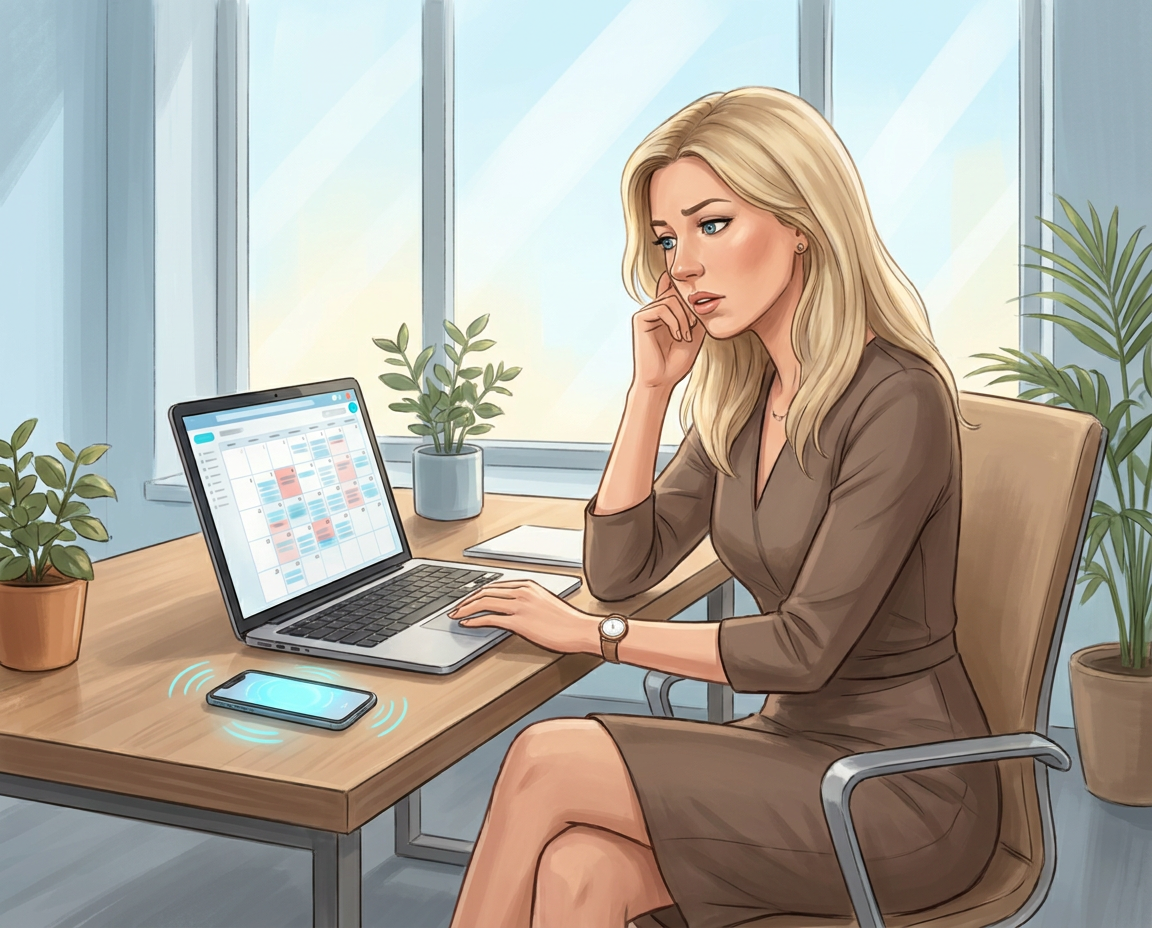
Phones start ringing more often again, inboxes fill up, calendars become colourful, and very quickly we are once again trying to do several things at the same time, precisely when we are becoming most vulnerable.
Not because we do not know that we should not click on suspicious links. We also know that it is not wise to use the same password everywhere, that we should have an additional layer of login verification and backups, and that it is worth checking again when someone suddenly sends us a new bank account number for a payment.
The problem is that we know all of this very well when we have time to think.
It is very different when we are running late, the phone is ringing, someone is asking us something, and at the same time we are responding to several messages and red exclamation marks. At moments like these, people often make mistakes not because they do not know better, but because they want to finish just one more thing, open a document because it looks familiar, or reply because someone is waiting.
Perhaps that is why I am more concerned today than I used to be about the culture of constant urgency that we have created ourselves. Because if almost everything is urgent, at some point we can no longer distinguish what is genuinely important – we simply react.
And someone on the other side of the computer is counting on exactly that.
This is where, for me, digital security and health at work begin to overlap much more than they might appear to at first glance. I have never seen a healthy working environment as merely a matter of having a good chair, enough light or the occasional team-building event. It is also an environment in which a person has the space to think, where every message is not an alarm, and where there is enough trust for someone to stop and say, “This looks strange to me. Let’s check it one more time.”
And, even more importantly, to be able to say, “I made a mistake.”
Mistakes will happen, no matter how good our technology is, how expensive our security systems are, or how many rules we have. In the end, there will still be a person sitting somewhere who may have had a bad night, may be worried about something at home, may be behind with their work and, at exactly the wrong moment, clicks one time too many.
To me, a much healthier system is one in which that person immediately says what happened rather than one in which they try to hide the mistake because they are afraid of the reaction. At that point, security stops being merely an IT issue and becomes a question of relationships, trust and the health of the organisation.
Perhaps that is also why nature so often brings me back to the question of resilience, because in nature, safety never means that nothing bad will happen. There will be storms, heavy rain, droughts or fires, and something that appeared stable yesterday can change very quickly.
Nature does not build its resilience on the idea that change will not happen. It adapts to whatever comes, and it seems to me that we should look at security in a similar way more often.
Of course, we need strong passwords, additional protection, backups, up-to-date systems and people who know how to recognise when something is wrong. But it is equally important to know what we will do if someone still finds a way in.
Can we continue working? Do we have our data stored somewhere else? Do we know whom to contact? Will we respond calmly, or will there be chaos? And will the first person who notices the problem say something immediately?
Resilience is not a life without problems, but the ability not to be carried away by them.
Lately, we have been talking a great deal about health, but we often divide it into separate areas: physical health is one thing, mental health another, work a third, data security a fourth, and the time we spend on our phones a fifth.
More and more, it seems to me that they are actually all part of the same story.
If we do not feel safe, our body knows it; if we are constantly expecting another message, problem or alarm, our body knows it; if we work in an environment where we are afraid to admit a mistake, it knows that too, just as it knows when we no longer have a single moment in which we do not have to be available.
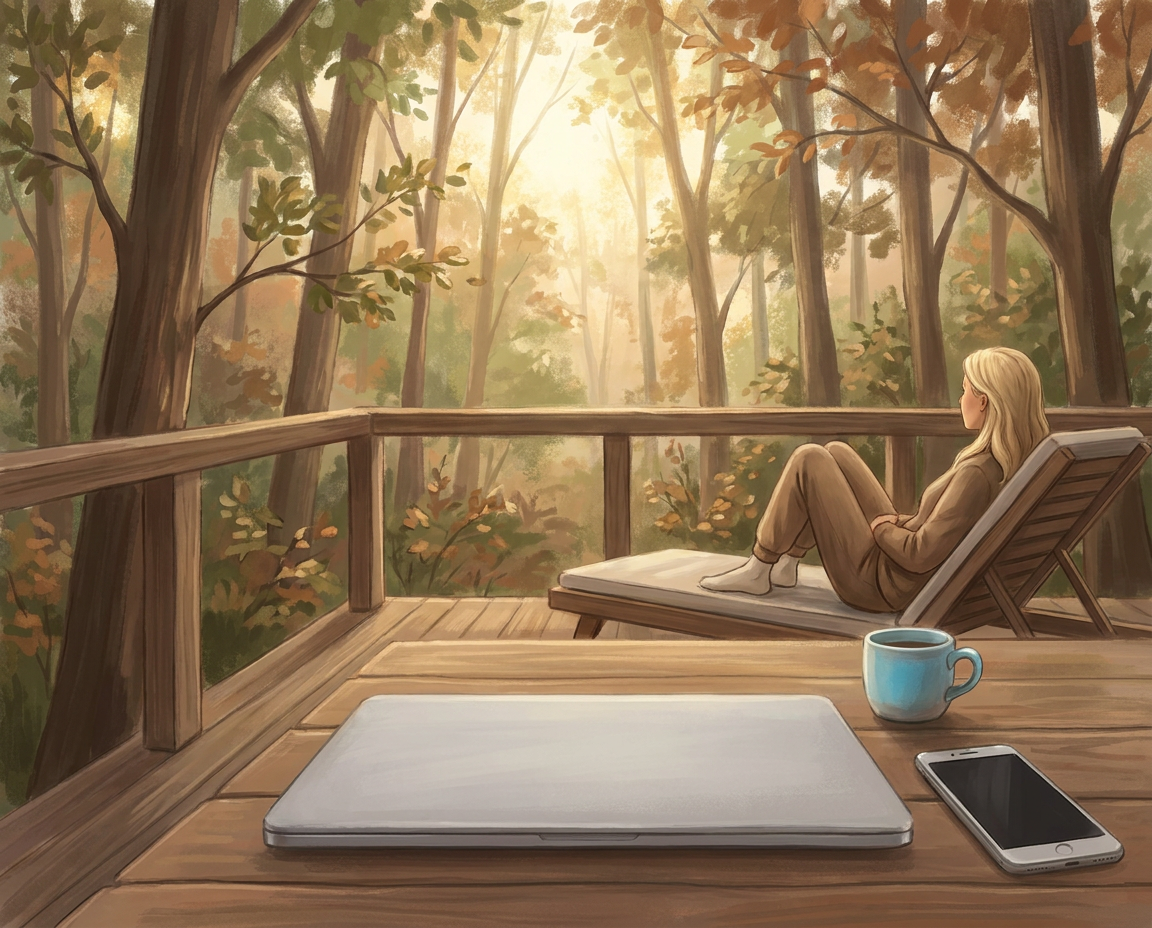
That is why it seems to me that a healthy digital environment begins long before we install security software on a computer and ends long after we close the laptop. It begins with our habits, our relationships and the way we work, continues with good technology and rules that still make sense when something goes wrong, and perhaps ends somewhere outside, where we once again feel that there is a world that does not need a password.
It is the middle of September, and nature is already slowly changing its rhythm, reminding us that we cannot live at the same pace all year round. Perhaps this is exactly the right moment for us to check our own systems as well – the ones in our computers, certainly, but also the ones within ourselves.
To change the password we have been using for too long, make a backup of what we do not want to lose and switch off a few unnecessary notifications, but perhaps also to ask ourselves what in our own lives we have left unprotected for too long, what we take for granted and what we simply assume
Mila Triller