Tourist or shopper? Guest.
There was a time when it was clear what a “shopping center” was and what a “tourist destination” was.
A shopping center was “a block of concrete with shops,” and a tourist destination was a place to escape into nature.
Today, those boundaries are fading. A shopping center is no longer just a place to buy things – it’s a space for connection, relaxation, and inspiration.
Across the world, people are recognizing this, and shopping centers are becoming filled with trees, greenery, and elements of nature.
Likewise, today’s tourist is no longer searching only for attractions, but for a sense of belonging, the taste of something local, and a moment to remember.
That’s why we now talk about destinations that can be commercial, gastronomic, cultural, sports-oriented, or experiential – or even a combination of all these.
It’s the same human need – to feel good.
Learning from different worlds
This topic often comes up at conferences.
At the most recent one I attended, focused on the retail sector in Istanbul, an architect from Hong Kong emphasized that shopping centers in Asia are designed as “living organisms”: with indoor gardens, water features, and quiet zones.
In Arab countries, shopping centers are places of spectacle; in larger European cities, they reflect elegance and tradition; and in Malaysia, among other attractions, there is literally a jungle inside a shopping mall or an airport.
Even airports are turning into destinations of experience – no longer just places to rush through on arrival or departure.
Each market has its own way of keeping the guest engaged – but the goal is the same: to evoke emotion.
Recently, I walked through one of Istanbul’s centers right after that conference.
It was Friday afternoon – the smell of coffee in the air, music, and children’s laughter.
I stopped by an indoor fountain surrounded by greenery and thought – ten years ago, this would have been an info desk, not a garden.
And that’s no coincidence.
Today, people aren’t just looking for products – we’re looking for spaces where we feel good.
Sometimes that’s in a store, sometimes while traveling. The difference between the two is getting smaller.
And maybe that’s the essence of what we’re all building today – in tourism, retail, or digital.
The seller as host, the center as home
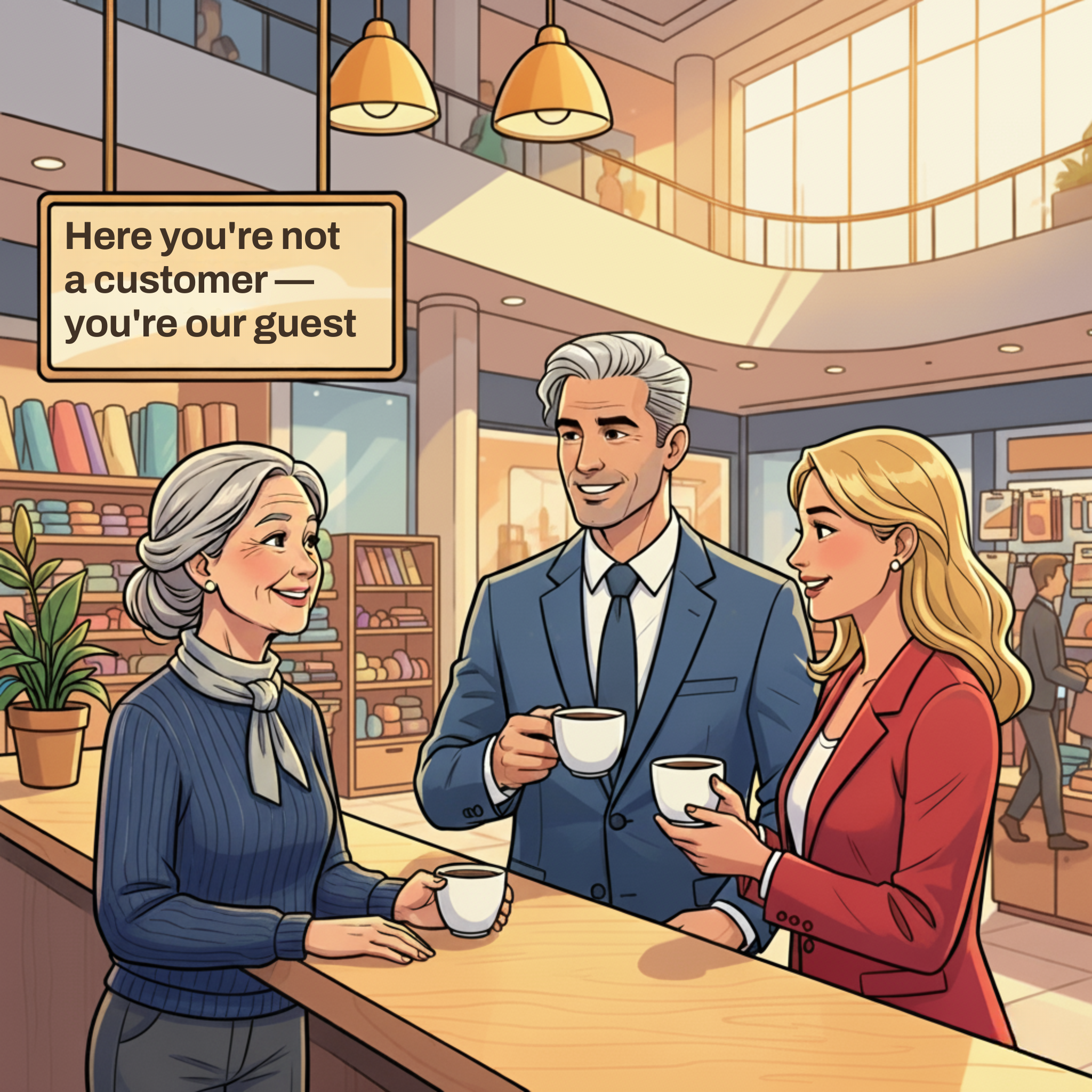
When we talk about experience, we’re really talking about people. Even the most impressive architecture means little if the experience feels cold. A salesperson or a waiter is no longer just an employee – they are a host. Their task is to create a sense of welcome. To notice you, listen to you, understand you. To help you – not just to sell. To make you leave with a smile – and come back again. But to do that, they need to be trained and educated – both those working in tourism and those in retail.
Food, conversation, and calm – the new luxury
A restaurant or café, whether it’s at a tourist destination or inside a shopping center, serves the same purpose.
The guest wants to rest, eat, drink – ideally something local – and simply feel good.
If we had to choose one area that defines success today in both tourism and retail, it would be F&B – food, beverage, and social connection.
Restaurants, cafés, food markets – these aren’t add-ons, they are the heart of every destination, whether tourist or commercial.
That’s where people connect. That’s where memories are made.
And that’s exactly what a tourist or shopper – in other words, a guest – takes home.
Technology as a mirror, not a goal
In an age of growing online sales, it may seem that digitalization solves everything.
But technology isn’t a magic wand – it’s a mirror of behavior.
Smart systems, analytics, loyalty programs – all of them are useful only if they help us understand people better.
If we don’t know how to listen, data won’t help us. And if we don’t use the data, we don’t need it at all.
We first need to understand the person – they must be at the center.
Of course, we can’t appeal to everyone, so we must first define what we want to offer, what we want to achieve, and who our target group (persona) is.
Then we describe the process, and finally, everything comes together through the right tool – digitalization.
That’s the order we often forget. Everything must go hand in hand.
Conclusion: the human is the destination
Whether we’re talking about a tourist or shopping destination – the goal is the same: the human being.
When someone feels welcomed, heard, and at peace, they become loyal.
Not because of points or discounts, but because they felt part of a story – and took home good memories.
Maybe that’s the true essence of future destinations:
It doesn’t matter what you come for — what matters is that you leave with a pleasant feeling.
Jurij Triller
Connect with me