The Greatest Stress for Me Is a Vacation
There are probably very few people in Slovenia who don’t know who Ivo Boscarol is. Naturally so - he’s one of the most successful entrepreneurs in our nation’s history, who made his mark on the world with his aircraft. Yet, few know the scale of milestones moved by this visionary from Ajdovščina, who often says that he’s had his share of difficulties in life simply because he always “stood out from the grey average.” Thanks to him and his team, Slovenia has been written among the pioneers - even world leaders - in aviation development. Especially due to an achievement that, not long ago, would have been considered pure science fiction.
Still, aviation is far from the only fascinating chapter in Mr. Boscarol’s rich life story.
People generally fall into two groups. Those who resist change, and those who thrive on it. How do you personally experience the great technological leaps we’ve witnessed in recent decades?
I’ve lived through transformations in many fields. Take photography, for example. When I started, it was mostly black and white. Then came color photography, followed by slides. But the real revolution came with digital photography. That’s when the biggest change happened - suddenly, every smartphone owner became a professional photographer. Back in my days behind the lens, nobody could have imagined progress of such speed and scale.
The same applies to sound. I was deeply involved in concerts, music, and sound technology. When I think of how far sound recording has come - from mechanical grooves on records to digital formats - it’s remarkable. Never before has progress condensed into such a short span of time as it has during my lifetime.
And it’s still happening today. Just look at artificial intelligence. It’s now shaping both these fields - image and sound - allowing us to create any picture or sound we imagine. In the most advanced countries, physical cards are already being replaced by face or fingerprint recognition, integrated directly into smartphones.
On one hand, all this fascinates me. On the other, I can’t help noticing how powerless we’ve become before such technology. And with that come new dangers - the potential for abuse. I’m very aware of that. And, frankly, I fear it.
You’ve constantly pushed the limits of what’s possible in aviation. That couldn’t have happened without the right approach and the right tools. How did you choose them?
In 1998, I read a short article in Delo about Toyota creating a car with two engines - electric and gasoline. The system worked on energy recuperation: the car generated electricity while going downhill. That was the first major breakthrough in automotive innovation after many stagnant years. I wanted to buy that car. Since it wasn’t sold in Europe, I imported one from Japan.
Through that, I got to know Toyota’s production processes. The Prius was the herald of hybrid and electric technology in the automotive world. I became fascinated - so much that I began studying Toyota’s organizational systems. Fortunately, professors Aleš Vahčič and the late Tea Petrin were already teaching the Toyota 20 Keys system at the Faculty of Economics, and they helped me implement it at Pipistrel.
I believe I was the first aircraft manufacturer to build an entire system - not just production - but also quality control, ordering, and other processes - on Toyota’s 20 Keys. The automotive industry is extremely lean; success there depends on the fifth or sixth decimal place of every euro.
As the company grew, I faced a decision: which ERP system to implement. We were too small for a system like SAP, used by most large corporations, and it lacked enough technical modules. So I opted for Infor LN - better suited for smaller companies, though also used by major aerospace firms.
What factors are most decisive for keeping a company on the right track?
Leadership must find the right balance - and have a bit of luck. In the past, digital service providers often failed to understand real business needs. With today’s AI-powered tools, things are somewhat easier. Still, your digitalization partner remains the key factor. Your success depends largely on them.
How did you make the final decision, and how did your employees take it?
In the end, we chose Infor LN - largely because of the support. Implementing digitalization always causes headaches and adds extra work for employees, especially key users. The first step is to convince people that the system is for them - that it will make their work easier and bring long-term benefits.
As a director, you must constantly remind everyone that digitalization requires an initial investment but pays off enormously in the long run. Two factors are critical: support from the provider, and flexibility - meaning how much the software can be adapted to your specific needs.
There’s an old saying: in a company’s hierarchy, the director is at the top, then there’s a long gap, then the IT department - and then another long gap. It’s an incredibly important department. It can make the company fly… or hold it down.
The market today is more competitive than ever. How did you handle these challenges - especially as a pioneer in so many fields?
We Slovenians have many great traits… and a few weaknesses. Our attitude toward innovation is definitely one of them. I believe caution toward new things is in our DNA. We’re often afraid of anything unfamiliar. We like the comfort zone.
Anyone who thinks outside those boundaries often struggles to be understood at home. In 2015, Večer awarded me “Statement of the Year” for saying: “Slovenians forgive everything - except success.” That line will still ring true here 500 years from now.
Here, it’s better to blend into the majority than to “stick out.” I never followed the beaten path - I always paved my own. If a challenge wasn’t impossible, it didn’t interest me.
Fortunately, I was good at attracting a team that shared that mindset. It’s not easy working with someone like me, but it’s rewarding. A strategist in a company can have his “head in the clouds,” but he needs a team with both feet on the ground. Luckily, my team trusted me. Even when my ideas seemed unrealistic, we made them happen - together.
An electric aircraft was one of those ideas. You often tell a great anecdote about that…
Yes. In the beginning, people actually asked me how long the electric cables would have to be for our planes to fly. But in the end, we changed mindsets. We even helped change global aviation law to include electric aircraft. After piston-engine certification in the U.S. in 1927 and jet-engine certification in the U.K. in 1953, we set the third great milestone in aviation history - 60 years later - by certifying the world’s first zero-emission, fully electric passenger aircraft for public transport.
That achievement proves what’s possible with a good team - and the belief that no wall is too thick if you have the right people to break through it.
Of course, you also need the right amount of caution - not to go too far - and you shouldn’t worry too much if people think you’re strange. I got over that early on. Many others never do.
Have you always been like that - even as a child?
Yes, since childhood. My mother would come home from parent-teacher meetings and say, “Why can’t you just be like everyone else?”
Of course, not everyone needs to be like me. But without people who challenge standards, there is no progress. There will always be those who say we don’t need all this advancement, that we could still live without electricity and modern inventions.
But humans naturally strive for comfort - and that’s what technology provides. It either makes work easier, increases efficiency, or enhances comfort. Unfortunately, it’s also often misused, producing negative consequences.
It surely wasn’t always easy. How did you find motivation - especially when facing the toughest obstacles?
I’ve always believed that whatever you do in life, you must first convince yourself before convincing others. If you want to lead and sell your vision to people, you must first believe in it completely.
As we say - don’t sell fog. And there’s plenty of fog for sale these days.
I’m an Aries - in the purest sense. I need challenges. My goals are high, which means working with me isn’t easy. I’m like a car with high beams permanently on - not caring whether the brake lights behind me work or not. That’s what gives me energy.
I’ve always managed to find like-minded people. I’m one of the rare few who can truly say that my hobby was my job, and my job my hobby.
The word “stress,” so common today, never really applied to me. Even with twenty-hour workdays and little sleep. Sure, I’ve faced failures - but I’ve never been crushed by them. Failure is part of business.
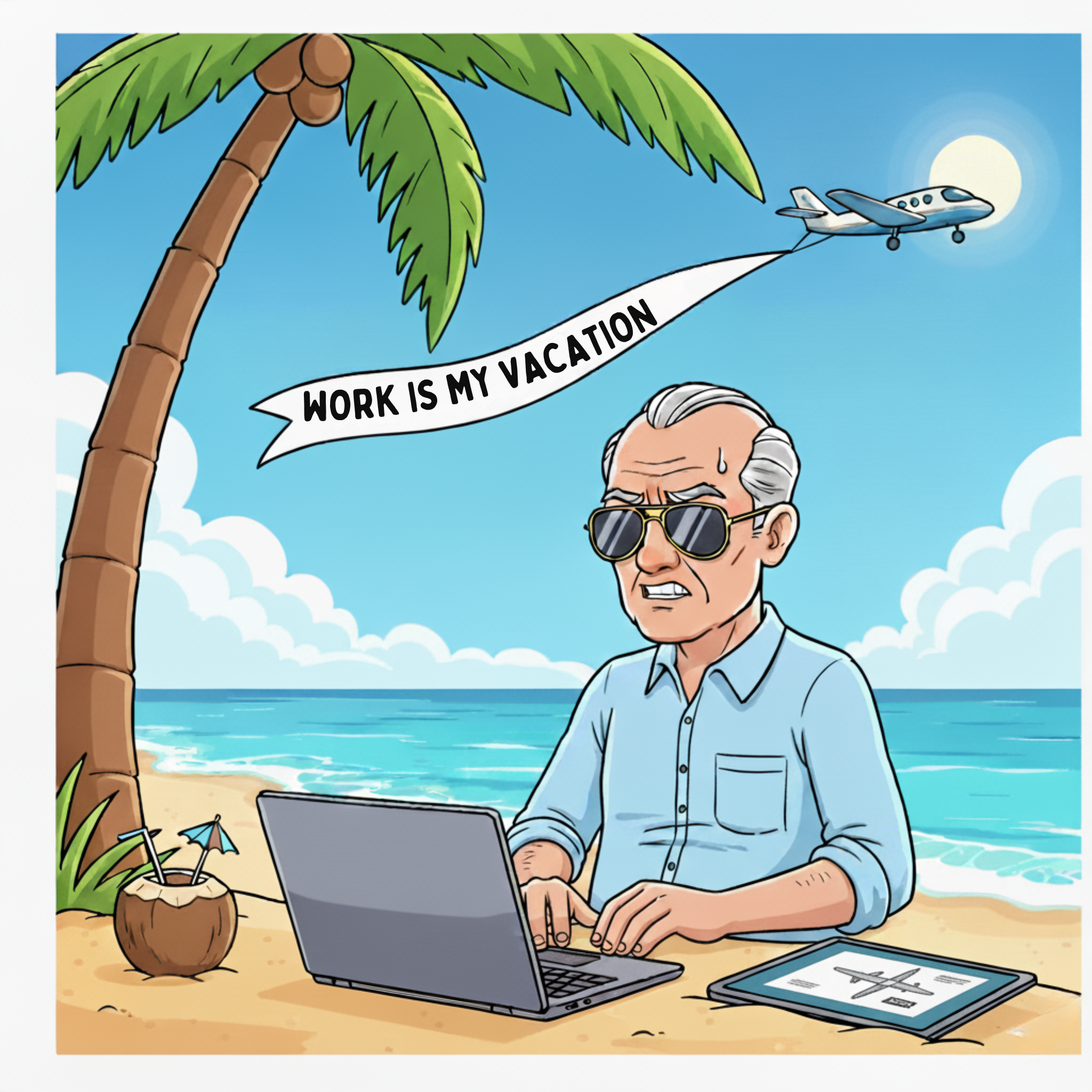
Honestly, the closest thing to stress for me is the thought of packing suitcases for a vacation.
I couldn’t last long lying under a palm tree or on a yacht. I enjoy taking a walk, visiting an interesting company, or meeting fascinating people who create innovative solutions. That’s worth far more to me than any vacation.
I especially enjoy sharing my experiences with young people - to help them avoid some of the wrong turns I once took.
To be continued…
Ivo Boscarol
Connect with me