
Everything for the Customer. Even If We Forget About Them in the Process.
This month, everything revolves around shopping. Singles’ Day, Black Friday, Black Week, Black Month. Sometimes I feel that soon we will have an entire Black Year. Although, when I look at all these offers, I wonder whether that is already the case for many wallets.
Shopping centres are preparing for one of the most important periods of the year. Retailers are counting on record sales, marketing teams are preparing campaigns, and everywhere we turn there are offers that we supposedly cannot afford to miss.
But when I put all that aside, something else interests me.
In all this consumer excitement, how much thought do we still give to the person?
I Buy Less and Know What I Want
I have reached an age when I buy considerably less than I used to. I simply have less desire for things I do not really need. And above all, it is because these days I know quite well what I want.
I would rather buy one quality item than five average ones. And yes, I admit that sometimes I am willing to pay considerably more for a particular brand, even though I could get a seemingly similar product without a well-known name for ten times less money.
For me, a brand still offers a certain sense of security. Quality, materials, practicality, and the knowledge that something will last me for years are important to me. But that does not mean I want to pay full price for it.
Over time, I have learned something about money. I respect it. And if I know I want something, why should I not try to buy it at a better price?
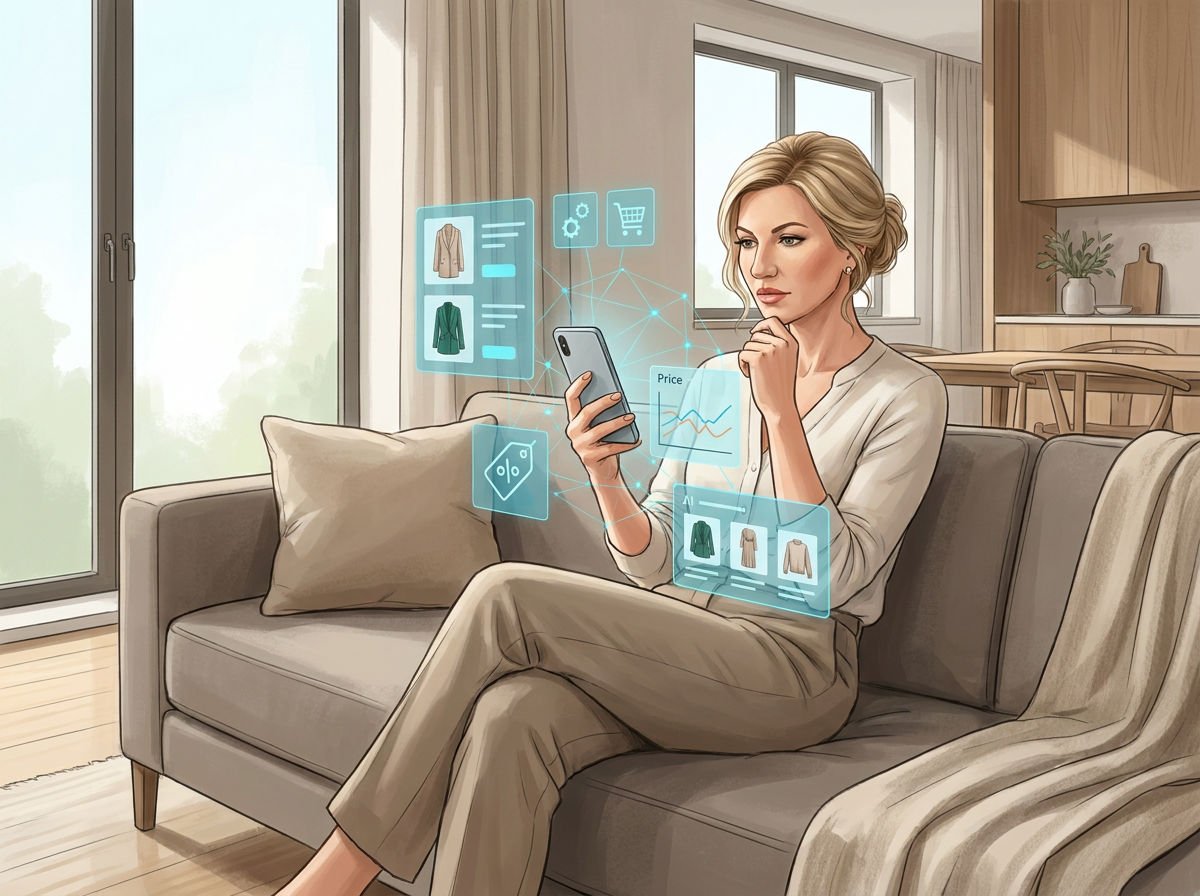
That is why I, too, have been keeping an eye on discounts these days. There are a few specific items I have been looking at for quite some time. I do not need ten new offers; I need a good price on the one thing I have already chosen. And that is where the problem begins.
In my experience, the things I truly want are very rarely on sale. If they ever are, my size is unavailable. Usually, they offer a discount of around 10%, which, to be honest, annoys me more than it encourages me to buy. If I am going to wait for a discount, I expect at least 30%. Otherwise, I can buy the item on any other day.
And this is where artificial intelligence can help. If they already know my shopping habits so well, or want to get to know them, then at least let them tell me when something I am genuinely interested in finally goes on sale.
But then I ask myself something else. If artificial intelligence chooses a gift for me, finds the best offer, and makes the purchase, what have I actually done?
Paid.
They Know Almost Everything About Us, Down to Our Shoe Size
Retailers today have an incredible amount of data at their disposal. They know what we buy, how often we return, what interests us, and which offers we respond to. At first glance, it all sounds wonderful. At last, we will receive offers that genuinely interest us. We will no longer waste time on irrelevant advertisements.
But is this always in our best interest? If a system knows what I most like to buy, will it help me buy what I need or what it can most easily sell me?
That strikes me as a rather important difference.
Millions for Technology. But What About a Single Bench?
Recently, I was thinking about how much money shopping centres invest in renovations, technology, and advertising. Digital screens, apps, smart systems, visitor analytics. Everything has to be modern, connected, and efficient.
And then you walk into a shopping centre and look for somewhere to sit for a few minutes.
I am not talking about a café where you have to order a coffee just to sit down. I am talking about an ordinary bench.

Or perhaps you are looking for a toilet. Some information. Someone who can help. I recently had an experience when my husband and I agreed that he would go and park the car and we would meet inside a shopping centre. We had not agreed on exactly where I would be. But I had forgotten that I had left my mobile phone with him in the car. An interesting situation arose: there was no information desk, no one I could turn to for help in calling him and sorting things out ... In the end, a shop assistant helped me.
Sometimes I get the feeling that, when designing these spaces, a great deal of thought goes into keeping visitors among the shops for as long as possible, and somewhat less into making sure they feel comfortable while they are there.
And no, I am not claiming that all shopping centres are like this. Far from it. Some are beautifully designed and genuinely understand their visitors. But that is precisely why it bothers me when I see the opposite. Because clearly, we know how to do it. Our priorities are just sometimes different.
AI Will Know Almost Everything. But We Should Not Automate Kindness.
Do not get me wrong. I am not against technology. Quite the opposite. In my work, I see how much good digitalisation can bring, how much it can simplify work, and how much it can improve the experience.
But technology is only a tool. If AI helps us understand visitors better, excellent. If it helps us reduce queues, find information, or simplify shopping, even better. The problem arises if we use it solely to sell people even more things.
Imagine the shopping centre of the future.
AI recognises you the moment you enter. It knows which shops you visit, what you usually buy, and how much you are willing to spend. It sends you completely personalised offers. It might even suggest a gift for your husband because his birthday is approaching.
Everything works flawlessly.
And then you need help and realise there is no one you can talk to.
A little absurd, isn't it?
On the one hand, we strive to create an increasingly personal shopping experience; on the other, we are slowly removing personal contact from it.
Perhaps We Have Somewhat Forgotten Who Comes First
Black Friday is just a few days away. Retailers will be monitoring sales results, visitors will be looking for bargains, and shopping centres will be delighted by high footfall. And rightly so. After all, it is business. But a visitor is not just a number in a report. Not just a transaction, a data point in a system, or a potential customer to whom we need to show yet another offer.
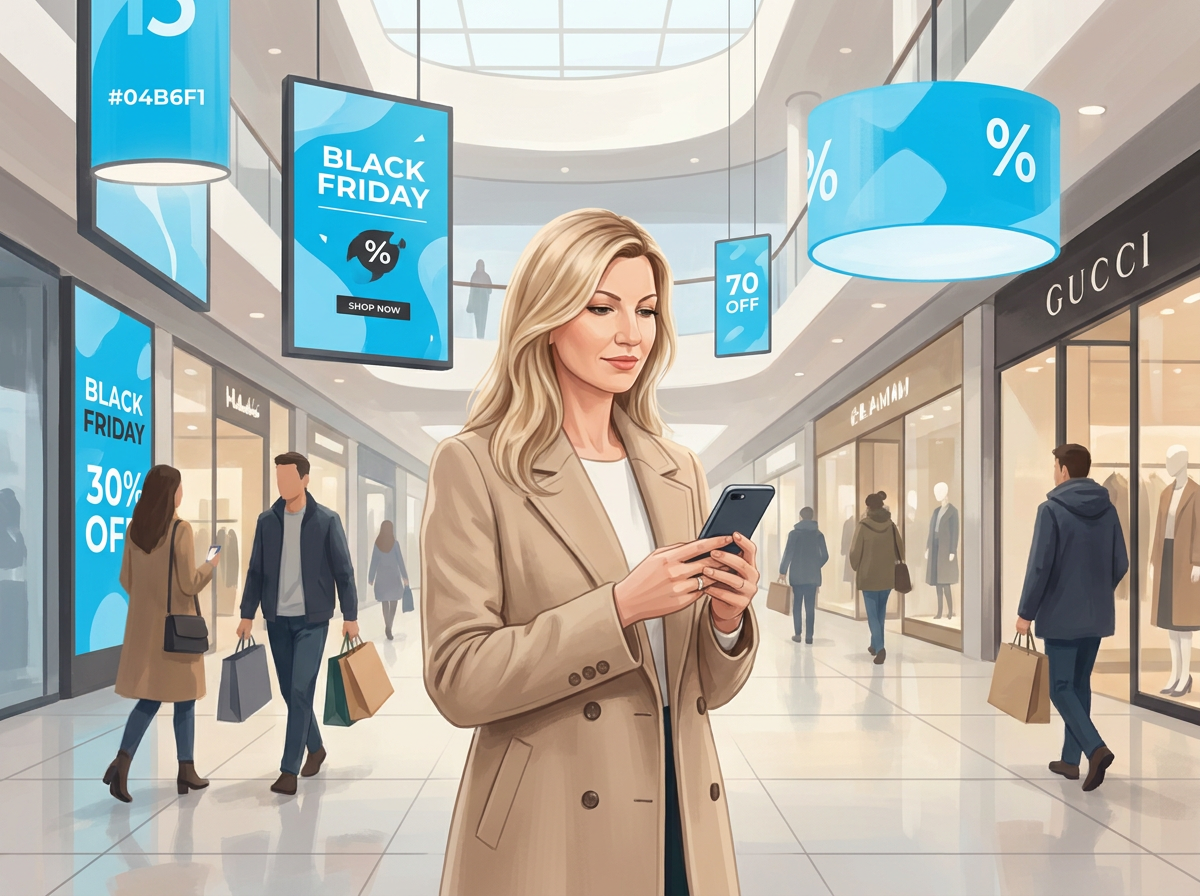
A visitor is a person. Sometimes tired. Sometimes in a bad mood. Sometimes there just for a coffee. Or for a walk because it is raining outside. Perhaps they want to buy a gift, or perhaps nothing at all.
And that visitor should be welcome, too.
It seems to me that, in our pursuit of ever smarter solutions, we have somewhat forgotten the simple things.
Kindness. Attention. The feeling that you are not merely someone who has to buy something.
Perhaps the greatest advantage of shopping centres in the future will be precisely their ability to remain human. Because technology will advance. Artificial intelligence will keep improving. Algorithms will know more and more about us.
But will they understand us any better because of it?
I do not know. All I know is that I do not want a shopping centre that knows everything about me but has no one who can kindly help me. And speaking of Black Friday – perhaps it would be good if not absolutely everything were discounted this year.
Especially not the attention we give to people.
Mila Triller