Black Friday: Loyalty or Just a One-Night Stand?
Every year, as the end of November approaches, I enjoy watching the dates on the calendar set off a theater of primal human instincts. It's a spectacle of two almost irreconcilable extremes.
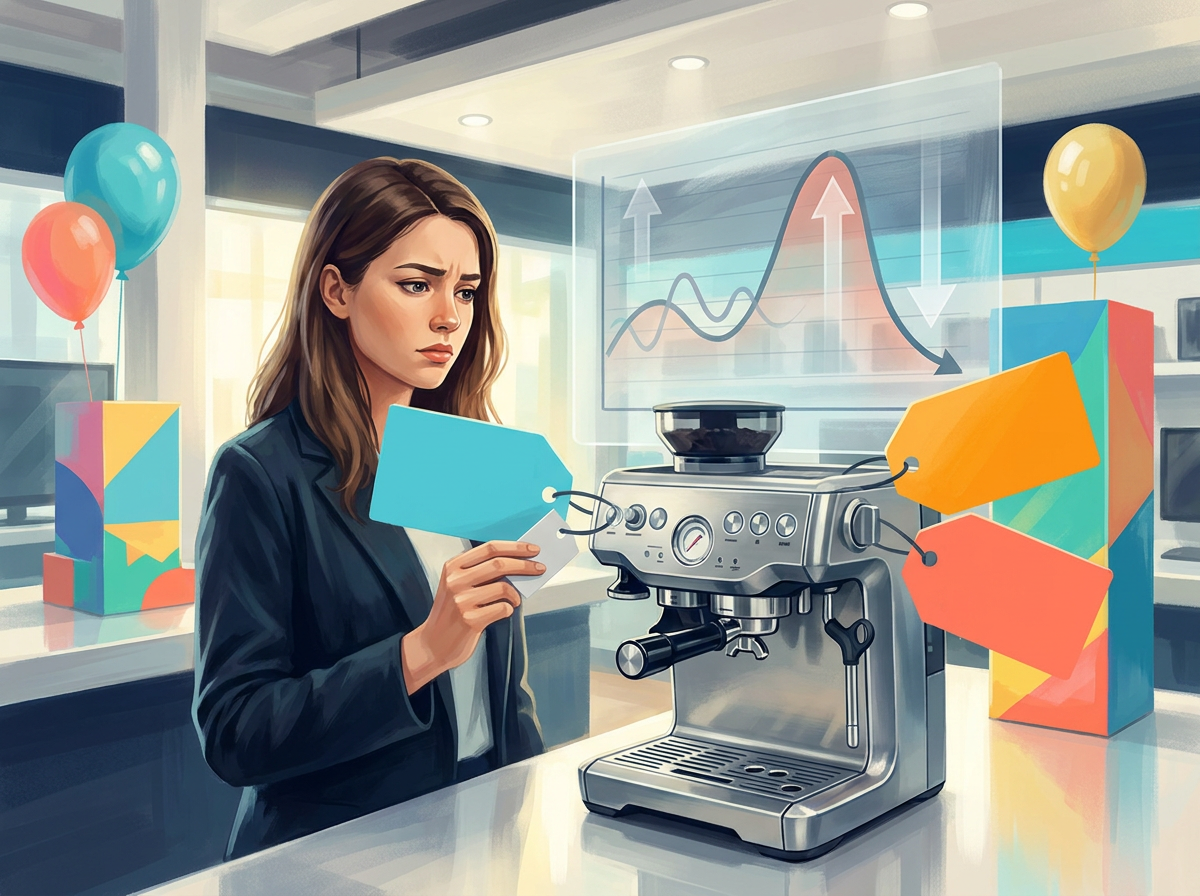
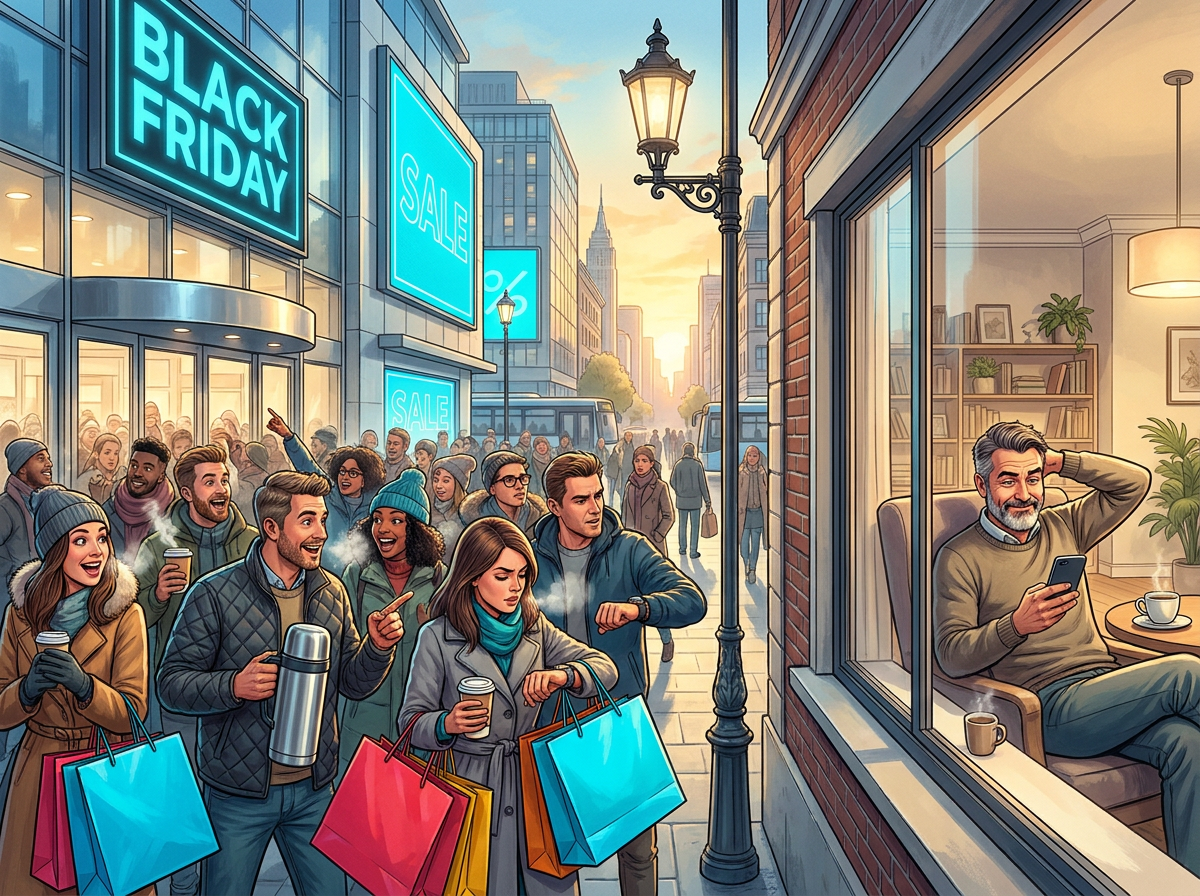
On one side are the tactical planners. These are people who spend weeks combing the store shelves with the precision of trackers. When they find the jacket or espresso machine they want, they secretly hide it behind a pile of winter blankets on a bottom shelf and camp out at five in the morning in front of the sliding glass doors. Thermos of coffee in hand. Eyes fixed on their prey.
On the other side, comfortably sprawled in their armchairs with a serene smile, are the seasoned skeptics. They will happily explain to anyone nearby that retailers quietly raise prices by 50 percent in October, then cut them by 25 in November. Meanwhile the "sheep" rush enthusiastically through the doors, celebrating an "excellent deal."
What's interesting about all this is that the consumer holiday didn't originate in a marketing office.
Where Does Black Friday Really Come From
It all began in the early 1960s, when Philadelphia police used the term "Black Friday" to describe the chaos after Thanksgiving. Crowds from the suburbs flooded the city ahead of the annual Army–Navy football game. All of it meant traffic jams, shoplifting, and exhausting double shifts for the police. Local merchants were so outraged by the gloomy name that they tried to rename the day "Big Friday." It didn't catch on.
In the 1980s, businesses found a far more appealing explanation: Black Friday was supposedly the day companies move from "the red" (losses) to "the black" (profit) in their books. It was a brilliant marketing move, and a much less depressing story than exhausted police officers directing traffic through a sea of bargain hunters.
Today, though, the skeptics have more ammunition than most brands would like.
The consumer organization Which? tracked the prices of 175 popular home, technology, and health products at eight major British retailers throughout the year. Its 2025 report showed that 83 percent of these products were available at the same price or lower at some other time outside the four-week Black Friday period. Even more striking, not a single product in the analysis hit its lowest annual price on Black Friday itself.
In other words: the biggest shopping day of the year isn't necessarily the best day to shop.
The spending figures tell another interesting story, too. According to Salesforce, global Black Friday sales in 2025 reached roughly $79 billion, 6 percent more than the year before. But for the US market, Salesforce also reported that average selling prices rose by about 7 percent while the number of orders fell by 1 percent. Higher spending doesn't automatically mean more products leaving the shelves.
Money is moving, but the story behind the headline can be considerably more complicated.
Despite all this evidence, the psychological association in consumers' minds is still extremely strong: Black Friday means big discounts.
I remember a time when this kind of shopping frenzy wasn't yet tied to an imported American "holiday of consumerism." Back then, local business owners sometimes tied their biggest promotional events to company anniversaries. It was a special day of the year when prices were truly insanely good, the atmosphere electric, and the doors nearly came off their hinges.
On paper, it sounds dreamy. In the short term, the success is very tangible.
But there's a trap here.
Training Customers Like Pavlov’s Dogs
Why? Because you're quietly training your customers like Pavlov's dogs. Once you've taught them they can predict your markdowns precisely, you instill in them a potentially fatal habit: "Never buy at full price!"
Why pay full price today if there will be a 40 percent discount next month?
Suddenly, October sales are dead because everyone is waiting for November. January looks like a ghost town because wallets are empty. And your carefully calculated pricing strategy becomes harder and harder to defend.
Because you haven't necessarily created more demand. You've just shifted it to another date on the calendar, sacrificing your margins in the process. What have you done to your customer lifetime value (CLV)?
Nothing good.
If you won a customer solely through a 50 percent discount, you haven't necessarily won a loyal advocate. You've won a bargain hunter. When your competitor offers 55 percent off, your new customer will most likely be gone.
Of course, not every customer drawn in by discounts behaves this way. But if your entire acquisition strategy rests on attracting people who care only about the lowest possible price, don't be surprised if loyalty turns out to be rather temporary.
Does this mean you should say no to discounts forever and sit idly by during the biggest shopping week of the year?
Absolutely not.
What we tell our partners again and again is this: discounts shouldn't be treated as a last resort, but as a surgical instrument.
It's never wise to get drawn into a price war. Instead, turn Black Friday into a private celebration for your best existing customers.
Rather than sacrificing margins for strangers who may never return, reward the people who already know your business, trust it, and value it.
Offer them something truly special: a limited edition of a product, a special tasting, a private consultation, early access to a new collection, or priority on something money can't buy.
Think about it. Which sounds more appealing? Receiving yet another generic 20-percent-off code that was probably sent to 50,000 other people, or being invited into a small group of customers with access to something exclusive?
The psychology here is completely different.
The Power of Being First
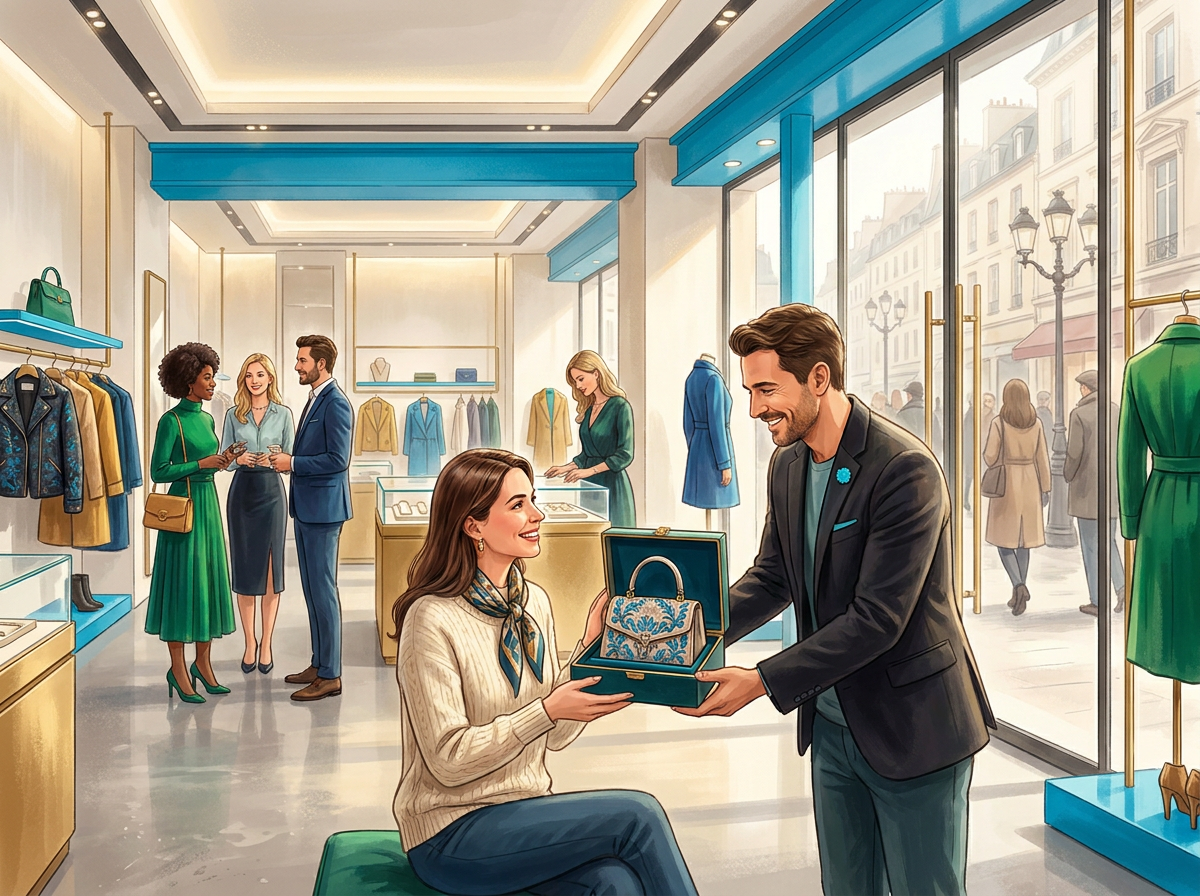
People don't always want to buy the cheapest thing. Sometimes they want to be first in line and to feel special while doing it. When you bring customers into your exclusive circle with early access, tailor-made bundles, exclusive experiences, or VIP privileges, you increase the value of your brand instead of slowly eroding it with discounts.
And sometimes privileged access is worth considerably more than a price cut.
A current example: after years of anticipation, the computer game Grand Theft Auto VI has hit the market. My son told me excitedly how far players were willing to go just to get their hands on the feverishly awaited game as soon as possible. Some even traveled to New Zealand!
That's right. Nobody asked the creators (that is, Rockstar Games) for a 30-percent-off coupon. People were willing to cross time zones and rearrange their schedules just because they wanted to try the game before everyone else.
It's a remarkable lesson in added value.
There's nothing wrong with selling a basic product on Black Friday at no profit, or even at a slight loss. In fact, it can be an excellent customer acquisition strategy.
But on one important condition. You have to know very precisely what happens after the purchase. The first purchase at a favorable price must be the beginning of a relationship, not your entire business model.
Without such a system, you're essentially paying people to visit your store once. With one, you're investing in the possibility of a profitable long-term relationship.
And the difference can be enormous.
Years ago, building this kind of back-end ecosystem required enterprise-level budgets and an army of developers.
The Question to Ask Before You Cut Your Prices
Today, things are very different.
Technology is no longer the biggest obstacle. The biggest obstacle is knowing what you want to achieve with it.
And perhaps that is the real opportunity of Black Friday.
Not merely selling more products in one frenzied 24-hour window, but using it to strengthen relationships, reward loyalty, introduce your business to new customers, and build a system that creates value long after the promotional banners have been put away.
So before you cut your prices in half, ask yourself a simple question:
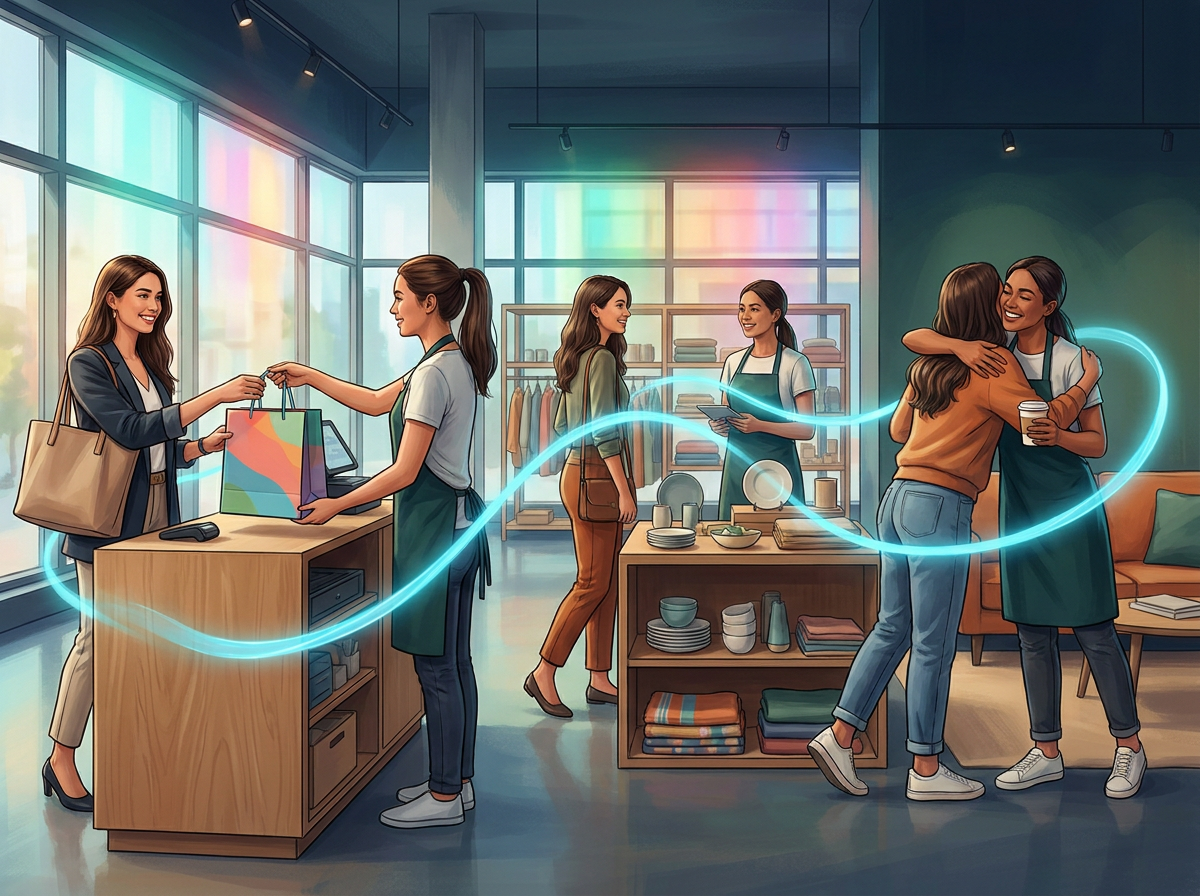
Are you building a system that will bring customers back even in April, or are you simply paying people to walk through your door once and forget your name by Monday?
And one final thought before you close this tab.
What if I told you that we've added a small but extremely effective psychological trigger to our core loyalty program solution? It's a piece of software that taps into human nature and is proven effective at winning new customers.
Since you've read the article to the end, we'd like to reward you with something special.
Do you have a business and have you been thinking about introducing a customer loyalty program, but found existing solutions too complicated, too expensive, or simply aimed at much larger companies?
We believe loyalty technology should be accessible to businesses of all sizes, not just large corporations with big IT and marketing budgets.
That's why we'd like to offer you the chance to experience the effectiveness of SmartGifty's solutions on special introductory terms. If you're interested, send us a short email by November 30, 2026, at sales@smartgifty.com with the subject line BLACK FRIDAY BONUS.
Tell us a few basic details about your business (industry, number of locations) and we'll reply with a personalized offer.
We look forward to hearing from you!
Boštjan Belčič