Inside the Mind of an Organizer Who Went Fully Digital—and Never Looked Back
In this feature, we sit down with Mark Drennan, a seasoned event organizer who has transformed his mid-sized event agency into a tech-forward operation. From in-person-only events to hybrid experiences, automated attendee segmentation, and post-event personalization, his journey reflects the broader evolution of the events industry.
Mark, what inspired you to transition from traditional events to a hybrid and digital-first model?
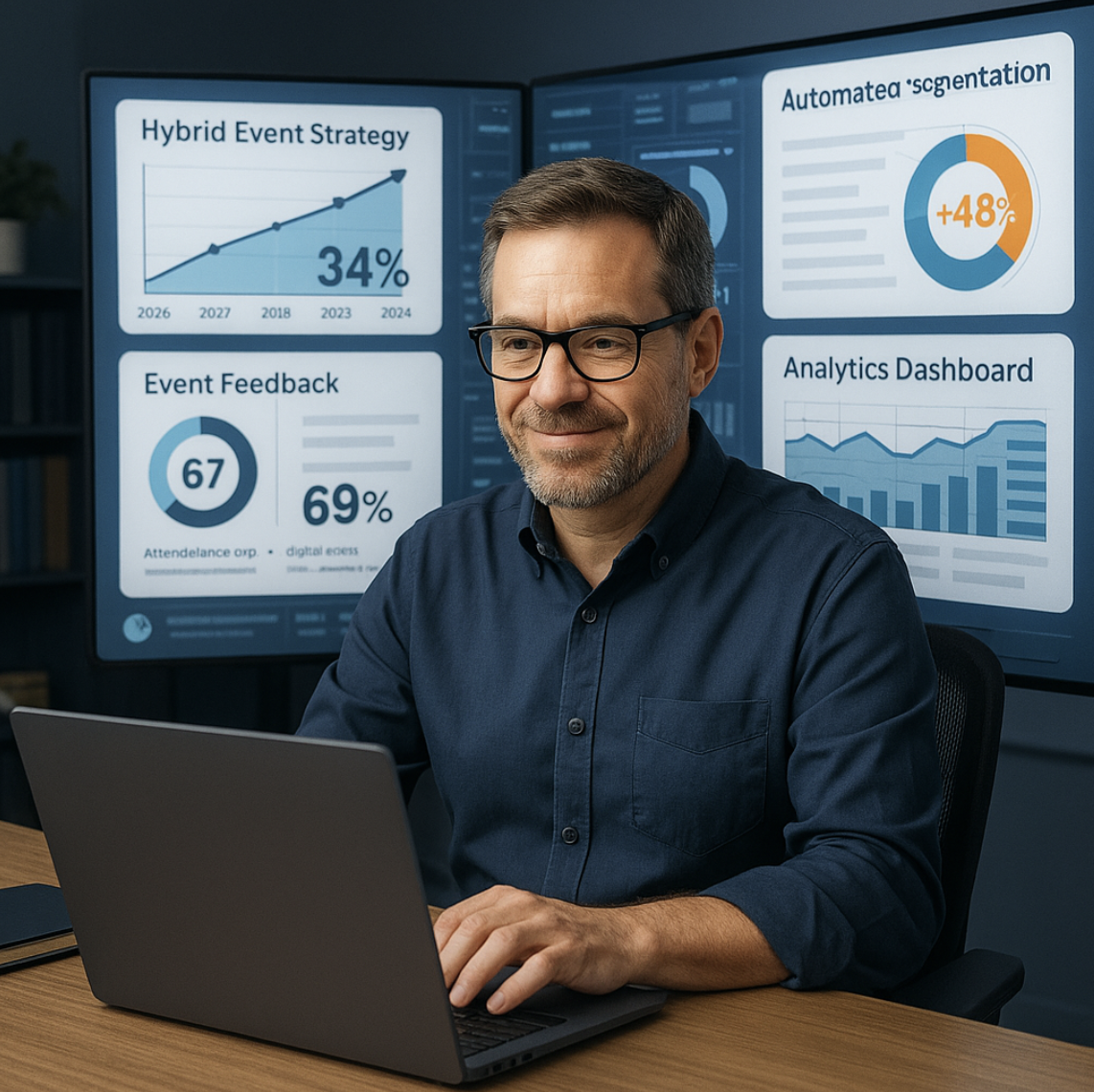
The turning point was the 2020 pandemic—but the momentum has only grown since. We realized that physical presence shouldn't be a limitation. By 2023, hybrid events accounted for 34% of all business events globally (source: AMEX Global Meetings and Events Forecast). It became clear: if we wanted scalability, data, and broader reach, digital integration wasn't optional—it was survival.
What specific tools or strategies have made the biggest impact?
The game-changer has been automated segmentation. We use behavioral data—such as session attendance, booth visits, and content downloads—to trigger personalized follow-ups. Platforms like HubSpot and Brella allow us to segment attendees in real time and automate post-event communication within 24 hours. As a result, post-event engagement increased by 48% in 2024 compared to previous years. People want relevance, and automation lets us deliver that without burning out the team.
What kind of feedback have you received from attendees?
They love it. Whether they attend in-person or virtually, they feel seen. One participant told us the recap email felt like it was written "just for them"—because it was. Our NPS (Net Promoter Score) jumped from 34 to 67 after we implemented this personalized approach in 2024. Hybrid formats also offer more flexibility. According to Statista, 69% of attendees now expect digital access to event content, even after the event is over. That expectation is only growing.
How has this transformation affected your internal operations?
Dramatically. Before automation, our team manually sorted leads, sent out emails, and stitched together reports from spreadsheets. Now, AI-driven tools handle segmentation, and analytics dashboards give us clear insight into what's working. We cut admin hours by 42% and reallocated that time to improving content and partnerships. In short: less grunt work, more strategy.
For event organizers who are hesitant, what's your advice?
Start small, but start now. Implement a simple CRM-integrated event tool that captures behavior and allows segmentation. Use that data to personalize follow-ups, even if you're not ready for full automation. Also, think long-term. This isn't just about one event—it's about building relationships at scale. According to Bizzabo's 2024 report, 80% of marketers believe in-person and hybrid events are critical to their company's success. Ignoring digital tools means missing out on that success.
CONCLUSION
This interview was written by AI, based on real-world industry data and trends. While the person is fictional, the insights reflect what's actually happening across leading event organizations worldwide. Mark Drennan's fictional journey mirrors a very real shift happening across the events industry. From hybrid formats to automated segmentation and post-event personalization, the tools are here—and so is the audience's expectation for smarter, more engaging experiences. The takeaway? Event organizers who embrace digital transformation aren't just surviving—they're scaling smarter, connecting deeper, and staying miles ahead of the curve.