
Women’s day without flowers: what women truly need in the digital age
If you expect a text that will end with advice to buy flowers, book a dinner and write a nice greeting card – you are free to stop reading here.
Because this text is not about that.
Every year at the beginning of March the world pauses for a moment to celebrate women. The ritual lasts one day and is forgotten the very next morning. Flowers are given, a photo appears on social media, sentences about the strength of women are spoken, posts are published on the subject – and the following day everything returns to normal. Back to the accelerated rhythm in which women once again become the organisers of everything: work, family, emotions, relationships and often – the peace in the room.
The truth, however, is much simpler and slightly uncomfortable. Most women today do not need another bouquet that will wither in a few days. They need something far more serious – space to breathe in a world that constantly expects them to be faster, more available and stronger than is humanly possible.
This text is intended for both men and women.
For men – because I believe it is important to remind you what support truly means to women. Not the symbolic kind that fits into a gift bag, but the real one: understanding, sharing the weight and respecting a rhythm in which a woman can remain healthy.
And for women – because we are often our own greatest opponents. Taught to be strong, responsible and available to everyone, we often forget the most important question of all: how am I – really?
The digital age and a new kind of fatigue / the invisible burden of the digital age
Never in history have we been so connected. And never so tired.
The phone is always with us, often even when we do not want to admit it. Messages arrive at every hour of the day and night, and the boundary between working time and private life has slowly dissolved somewhere between the last evening email and the first glance at the screen as soon as we wake up.
In such an environment women often become the invisible centre of everything. They are the ones who connect people, remember details, coordinate obligations, calm situations and keep the system together.
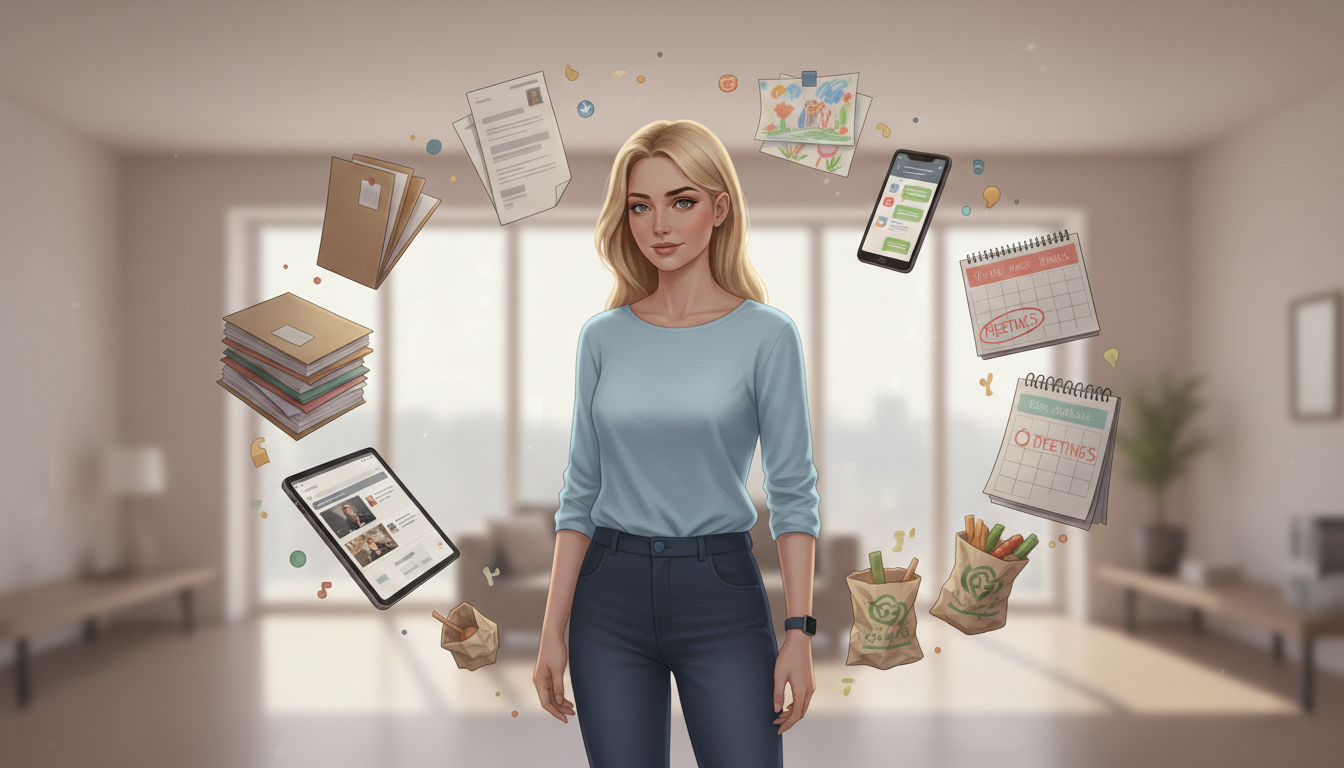
In the professional world this means managing projects and teams, while at home it often means the logistics of everyday life – invisible work without which everything would simply stop.
This is the quiet kind of work that is rarely measured, yet many systems could not function without it.
And while technology promises efficiency, speed and connection, it simultaneously creates a new form of pressure: constant availability, constant alertness and the feeling that there is always something more that needs to be done.
The problem is that the human body is not designed for such a pace.
The body speaks when we stop listening
In the digital world it is possible to ignore many things. We can postpone an email, silence a notification or delay a meeting. But the body does not function in that way.
It begins to send signals that cannot be filtered: fatigue that appears without a clear reason, tension in the shoulders that does not disappear, restlessness in the mind that appears in the middle of the night as if someone has pressed the play button in your head.
These signals are not weakness. They are the intelligence of the body trying to restore balance.
In the digital world we often try to ignore them. We drink another coffee, complete another task, respond to a few more messages. We train ourselves to function even when the body clearly says it would rather stop.
This is why health in the digital age is no longer only a question of diet, exercise or occasional rest. Health becomes a question of rhythm – the ability to find a pace at which we can truly live, rather than simply survive between deadlines and obligations.
What women need more than flowers
If we honestly asked women what they want for Women’s Day, the answers would probably be much simpler than we expect.
A little more time that is not already filled with obligations. A little more understanding in everyday life. And a little more support in moments when the burden becomes too heavy.
Sometimes that means someone else taking on part of the responsibility.
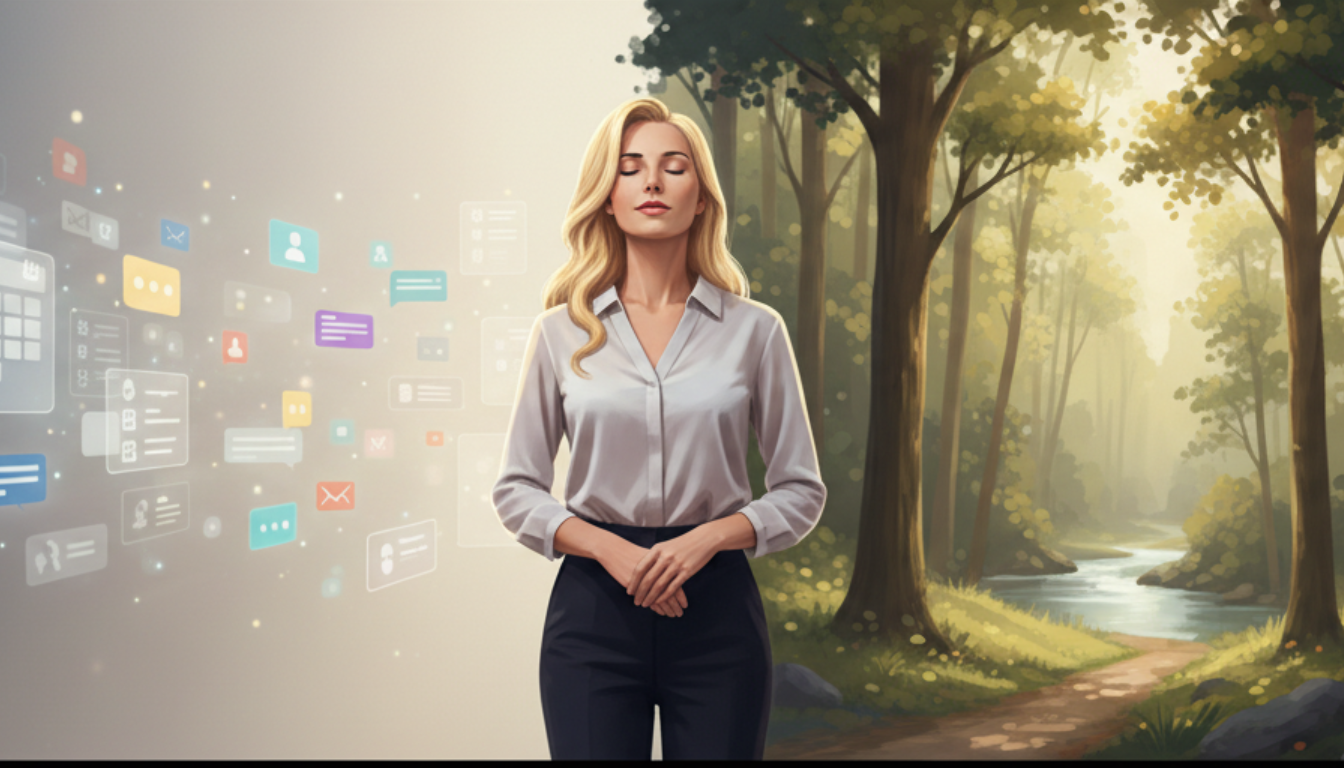
Sometimes it means that a woman does not always have to be the one who keeps everything under control. And sometimes it simply means space to be – without roles, without expectations and without the feeling that every moment of rest must be justified.
These are small changes, yet they carry enormous value.
Because a woman who has space for herself does not lose her strength – she actually regains it.
Nature as a counterbalance to the digital world
Whenever I feel the digital rhythm pulling me faster than I wish, I return to something that has never lost its balance.
Nature. In the forest no one is in a hurry. A tree does not try to grow faster than another tree. A river does not check notifications or attempt to optimise its flow.
Everything unfolds in a rhythm that existed long before we invented calendars, deadlines and notifications. And that is precisely why time spent in nature feels almost healing – because the body finally receives a signal that it is safe to slow down.
Breathing becomes deeper. Steps slower. Thoughts clearer.
And then we realise something we often forget in the digital world: health is not a luxury – health is balance.
Women’s day as a reminder of something more important
Perhaps the true message of Women’s Day is simpler than we think.
Caring for women should not be limited to a single day of the year.
Men who understand how much women often carry on their shoulders become partners rather than observers. And women who learn to pause and listen to themselves create a healthier space for everyone around them.
Because a woman who has space to breathe does not become weaker.
She becomes steadier. Calmer. And – paradoxically – even stronger. A world in which women have that space is a world that has a chance to remain healthy. Not only on 8 March, but on every day that follows.
So if we truly want to celebrate women today, let us give (ourselves) the most beautiful gift – something that cannot be bought in a flower shop.
Instead, a sincere question: “How are you – really?”
And then – even more importantly – having enough time and courage to truly listen to the answer.
Mila Triller
Connect with me