We Don’t Need a Digital Detox, but Healthy Boundaries

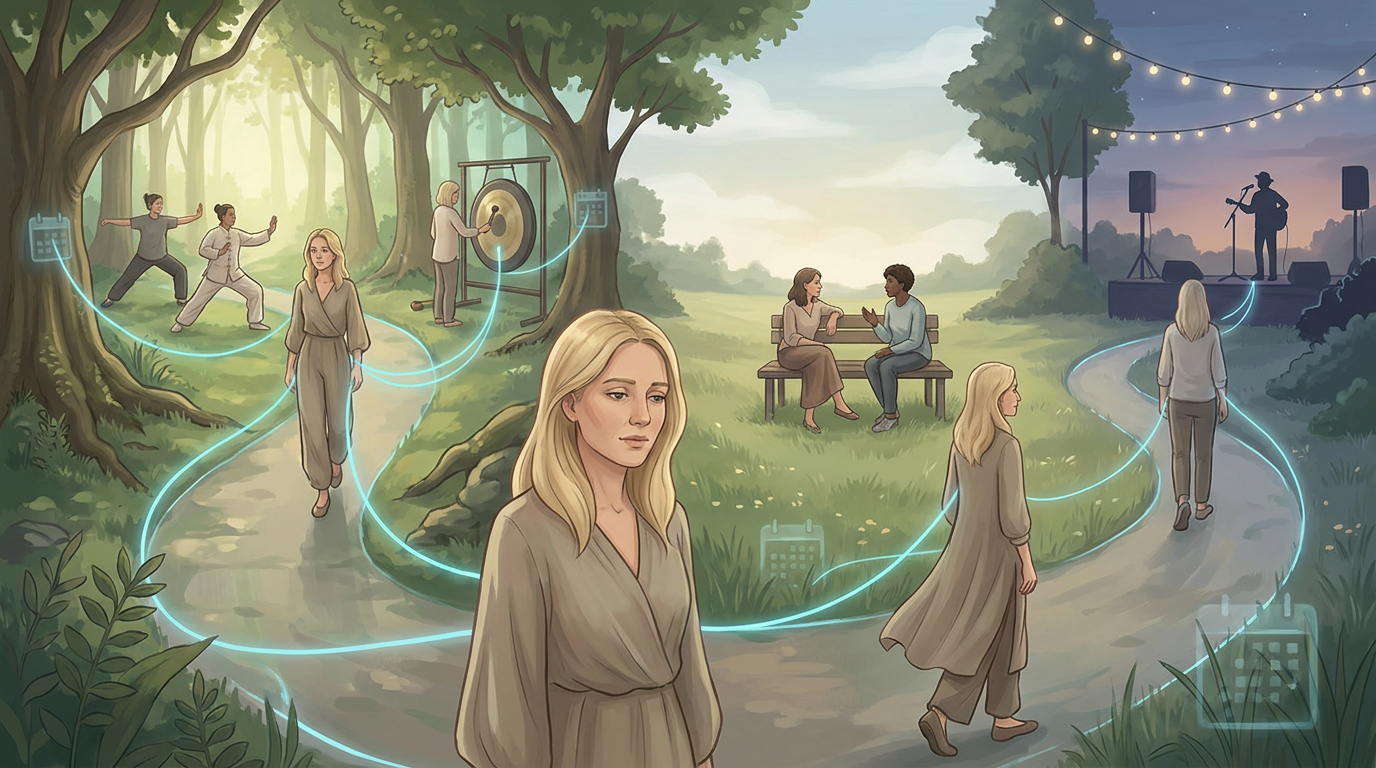
Last weekend, I spent three days at an international conference in a small town in Croatia. In nature. I led forest bathing sessions, practised tai chi, immersed myself in a sound bath, and listened to concerts in the evenings.
It sounds idyllic. And for the most part, it was.
But the programme was so full of relaxing activities that at one point I asked myself: Can even relaxation become just another obligation that we have to complete successfully?
Into the forest at a certain time. Then tai chi. After that, a lecture, a conversation, lunch, a sound bath, and an evening concert. In between, I worked, led activities, met people, and exchanged contacts.
My phone was put aside most of the time. There was less data. Fewer emails, news stories, statistics, and notifications. And with that, there were also fewer of those small decisions that we usually barely notice.
Should I reply now? Should I just check quickly? Is this important? Do I need to save this? Will I miss something?
The phone did not disappear. For a while, it simply stopped determining the rhythm of the day.
When Even Well-Being Becomes a Project
Today, we want to measure almost everything: sleep quality, the number of steps, heart rate, stress, screen time, and even minutes of mindfulness.
We have turned relaxation into data as well.
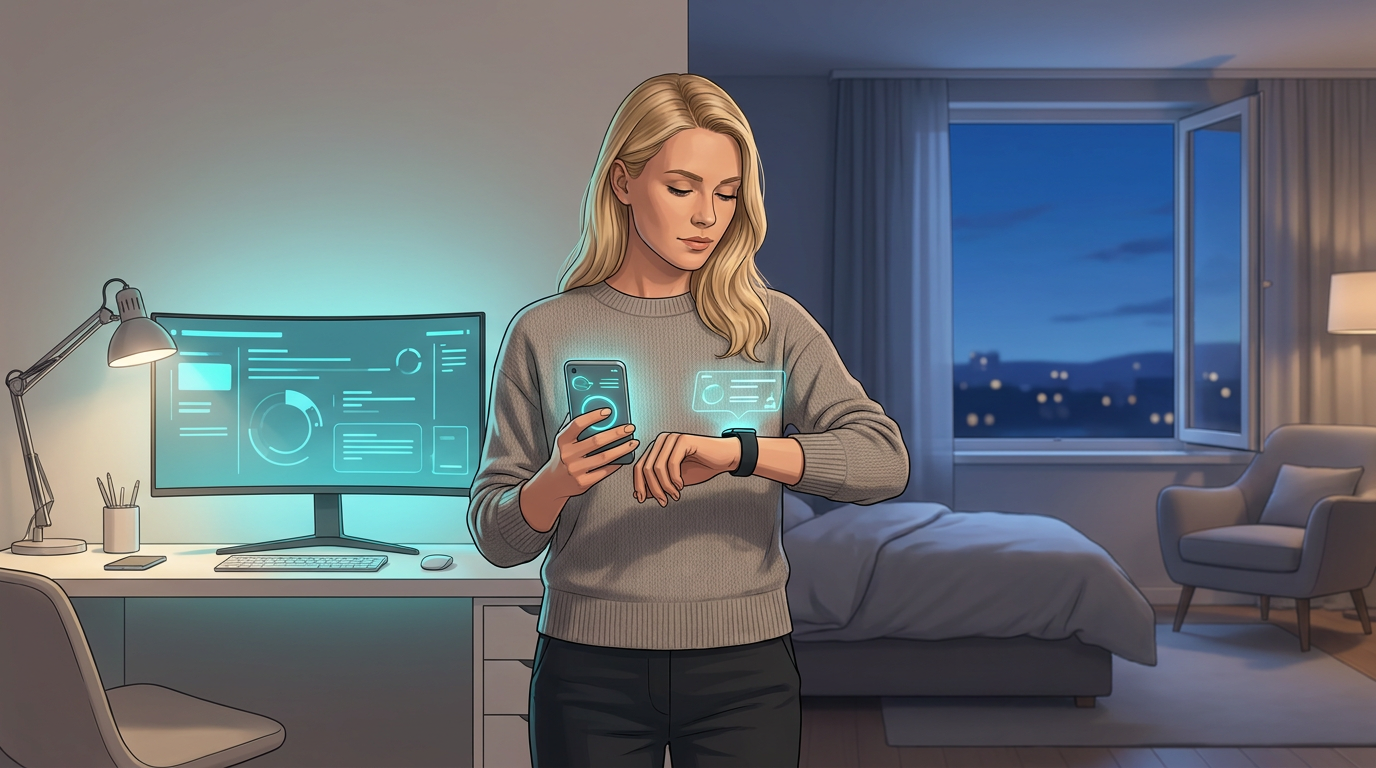
A smartwatch can warn us in the morning that we slept poorly. But even though it shows us a red number on the screen, it cannot cancel an evening meeting for us, turn off the television, or send us to bed earlier.
An app can count our steps. But it cannot go for a walk on our behalf.
It can tell us that we are under stress, but it cannot set a boundary with someone who expects an answer from us at ten o’clock in the evening.
We cannot transfer our health to an app. Measurement can help us understand our behaviour, but the decision remains ours.
The same applies to forest bathing, tai chi, or a sound bath. No method will truly calm us if, while taking part in it, we are already thinking about what we have to do immediately afterwards. Even the most beautiful activity can become just another item on an overcrowded schedule.
Perhaps We Do Not Need a Detox, but a Boundary
The term digital detox creates the impression that technology is some kind of poison from which we occasionally need to cleanse ourselves. We put down our phones for a few days, return to nature, and then expect to feel renewed.
But after the detox ends, the same life is usually waiting for us on the screen.
A review of research on digital detoxes showed that there is no single agreed definition of what they are and that complete abstinence does not always produce the best results. A deliberate reduction in use and a change in habits are often more beneficial than a complete but short-lived break. The effects also depend on the individual, their environment, and the way they use technology.
Another interesting experiment did not take participants’ phones away for two weeks. They kept calls and messages, but mobile internet access was blocked. Reducing constant connectivity was associated with better concentration, subjective well-being, and mental health. The difference, therefore, was not between having a phone and living without one, but between being constantly available and having the possibility of occasionally disconnecting.
Digital well-being is therefore not a life without technology. It is a life in which technology does not demand our attention every time it is capable of capturing it.
Good Technology Also Knows How to Be Quiet
Technology is not the enemy. At this conference, it helped me find the location, check the programme, stay in touch with people, and later save new contacts.
The problem was not that I used it. The difference was that I did not use it all the time.
This is also an important lesson for companies, events, and destinations. A digital solution should not keep the user in front of a screen for longer than necessary.
At an event, it should enable them to register quickly, show them the right information, and direct them to the space or person they are looking for. In a loyalty programme, it should offer them a relevant benefit, not another reason to check their phone. When visiting a destination, it should make it easier for them to reach a real experience, rather than becoming the experience itself.
Good technology reduces friction, unnecessary steps, and irrelevant messages.
Then it steps aside.
Companies often measure the success of digital solutions by the amount of time a user spends in an app. But is more time always a sign of a better experience?
Perhaps sometimes the opposite is true.
Perhaps the best app is the one that allows a user to complete their task in thirty seconds, put their phone away, and look around.
Who Determines Our Rhythm?
Three days in nature did not resolve my relationship with technology. Forest bathing, tai chi, and concerts did not erase the obligations waiting for me at home either.
But they created a space in which I was able to notice something more clearly.
It was not only the absence of my phone that calmed me. What calmed me most was that I did not have to react all the time.
Less data meant fewer unimportant decisions. And fewer decisions meant more space for people, conversations, sounds, movement, and the forest.
Digital well-being therefore does not begin by turning off the phone. It begins with a boundary. With the decision about when technology serves us and when we will not allow it to interrupt something more important.
Technology can measure our behaviour, sleep, movement, and screen time. It can warn us and offer us a recommendation.
But it cannot make the decision for us.
The smartest technology is not the technology that demands the most attention from us. The smartest technology is the one that helps us and then steps aside, so that we can once again direct our attention towards life.
Mila Triller