
Which path is the right one?
Have you ever found yourself at a crossroads and wondered which direction to choose? This classic dilemma of two paths has nowadays become extremely modern. Especially in the world of social media, where self-help topics are popular in general.
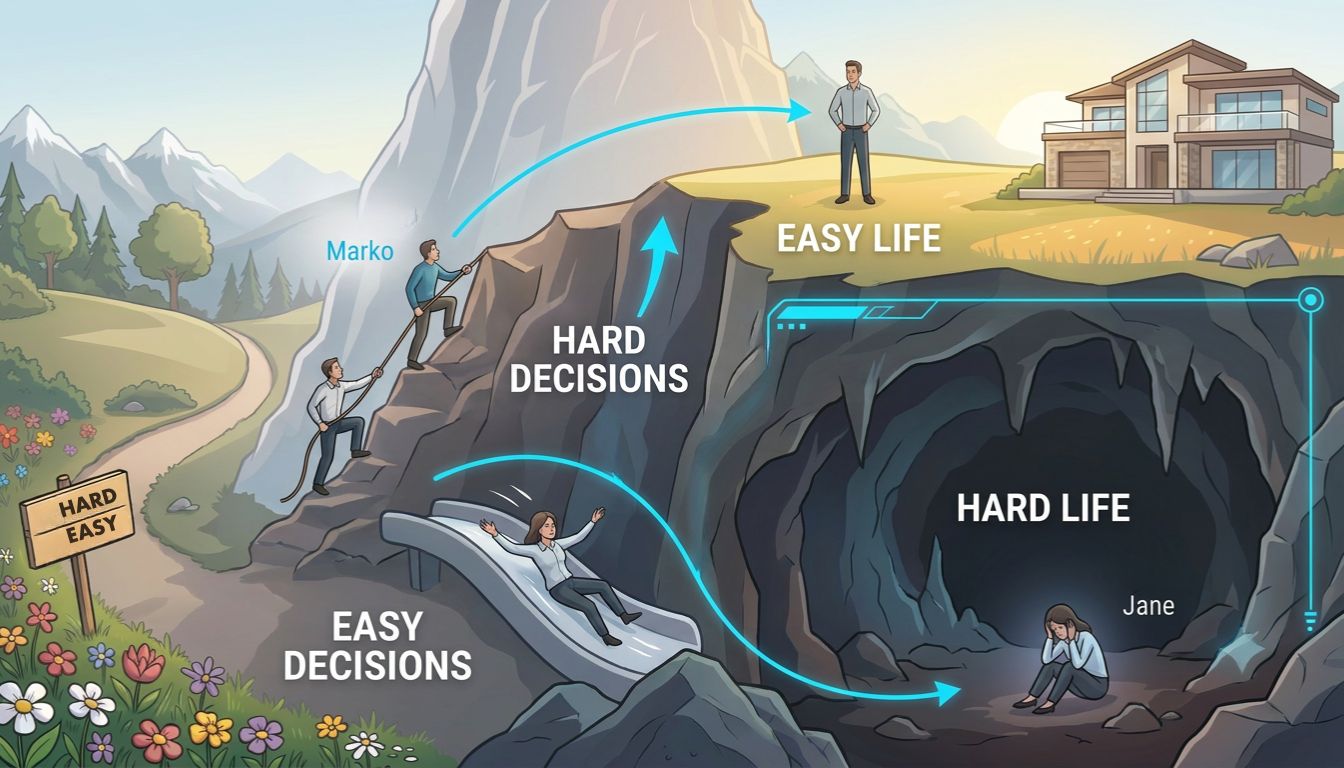
If you spend at least 2 minutes a day on social networks, you have certainly already seen the visualization that regularly circulates on the web and excellently illustrates this concept. On one side is the path that offers a feather-light beginning, but leads to a demanding conclusion (in climbing language we talk about difficulty somewhere from 9a upwards) - on the other side is the path that already begins demanding, but in the end brings a calm and easily achievable goal. Most often, two climbers are depicted in these illustrations. The face of both is at the beginning and end of course diametrically different...
If I'm completely honest, with mountains of this kind of choice I don't have bigger problems. If I'm in a dilemma on pathless terrain, even today I prefer to choose the path that leads (even if only a few meters) higher. Simply because I know how it is if you go in the wrong direction downhill and then have to again and again compensate the hard earned and lost altitude meters. But in everyday life the story is often different. I admit that easier and seemingly more favorable choices often tempt me. These are those shortcuts that usually in more than 90% of cases at the end prove to be substantially more expensive and more strenuous.
An excellent example is for example the decision at the purchase of sports equipment. I remember cases when I was buying equipment and instead of top mountain boots chose a (little) cheaper version with the thought how smartly I saved. Result? Blisters, pains and complete lack of enjoyment in walking. Because of the small saving at the beginning I thus destroyed the entire experience, at the end I still had to buy that proper equipment. Cheap and easy choice became the most expensive.
It is interesting that before the choice itself we usually know very well which path is the right one. Deep in ourselves we know the correct answer. Why then don't we choose it? Because it is harder on paper. We prefer to take the easier path, start scattered and hope that "we will then somehow".
An excellent example of this mindset from our business practice is digitalization. This is nowadays an absolute buzzword. Everyone talks about it and it sounds really super – it sounds like a magic wand, where one press on a button will take care that the entire business will flow by itself. Don't get me wrong, it is true, successful digitalization brings many exceptional advantages. It enables us highly personalized offers, brings in-depth knowledge of customers and increases efficiency. But in practice it most often breaks right at the beginning. In this area the metaphor from the introduction comes to full expression. Let's take the example of gift cards. If you are the manager of a large trading center and are thinking about introducing a gift card, it is the easiest if you decide for a solution that is supported by the largest banking systems. At the beginning it will seem to you that all who think differently are at least 'slightly crazy'. Of course. The integration is simple. All POS terminals are already prepared for this system. Everything works in a few minutes. Then such a manager comes to the word 'but'... and questions like:
- when can I start issuing personalized e-cards?
- how do I know when and where people spend the most?
- how could I upgrade the system with the help of 'gamification' and offer guests an even better user experience?
This is the moment of cruel realization, when such a person crashes into the laws of functioning of individual functionalities. At that time it is often already too late, as our marketing manager is condemned to a system that is already in its very foundation very limited.
All this happens very often, in all areas. Therefore a diet that promises weight loss while enjoying ice cream in front of television screens will always be more resounding than the one that starts with the sentence: “From today onwards, until death you will every day walk 10 kilometers...”
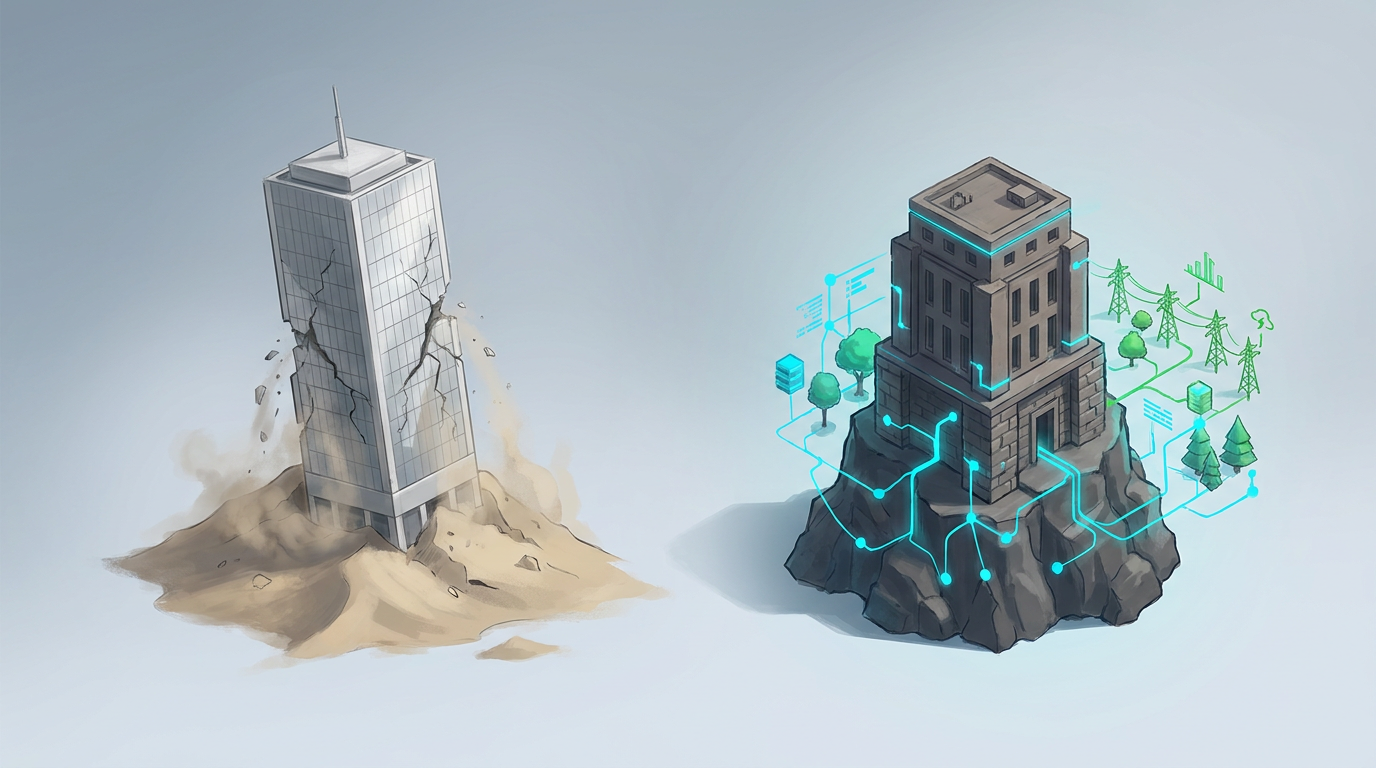
This is not surprising, as it is in human nature that we want to achieve excellent results by shortcut. With joy we would enjoy in wonderful final results, we would not invest that necessary effort in building solid foundations.
Why also organizations so often flee from this harder beginning? The fact is that easy decisions rarely bring big changes. Every important decision namely irrevocably closes at least one other option.
In practice we see that organizations too often choose those safe decisions. Such that can be quickly revoked and that don't really upset anyone. Therefore we are witnesses to endless pilot projects that become "permanent pilots", simply because no one wants to take the risk and accept the decision on continuation or on complete closure. Rather compromises are looked for that currently satisfy all involved, but in reality do not change anything essential.
The right decision is different. It requires clear priority and renunciation of something else. Above all personal responsibility of the responsible ones and unrelenting consistency in execution.
Does there exist a right recipe how to get through this dilemma? There is no universal rule that would apply for absolutely every case. But, when you will next time find yourself at a crossroads and will be exactly setting up a program that should increase the lifetime value of the customer (CLV), stop for a moment. First trust the 'gut feeling', then openly ask yourself: “Will the foundations that we are currently building on the sandy dune of compromises really bring the same results as those built on solid rock?”
Do not forget. The decision starts really changing the organization only at the moment when it costs you something. This investment is measured through invested funds, engagement and commitment to a clearly set goal. All this are often demanding challenges. And when you will motivatedly tackle these challenges, you will quickly get the answer if you have set off on the right path or not.
Boštjan Belčič