Iraq: Digital Leap from the Shadow of the Past
Iraq. What do we first think of when we hear this word? The war with Iran, the American invasion, NATO, Saddam Hussein, ISIS, oil, heat and sand. These are the images that news have created for decades and that we in Europe often carry with us even before we even visit the country.
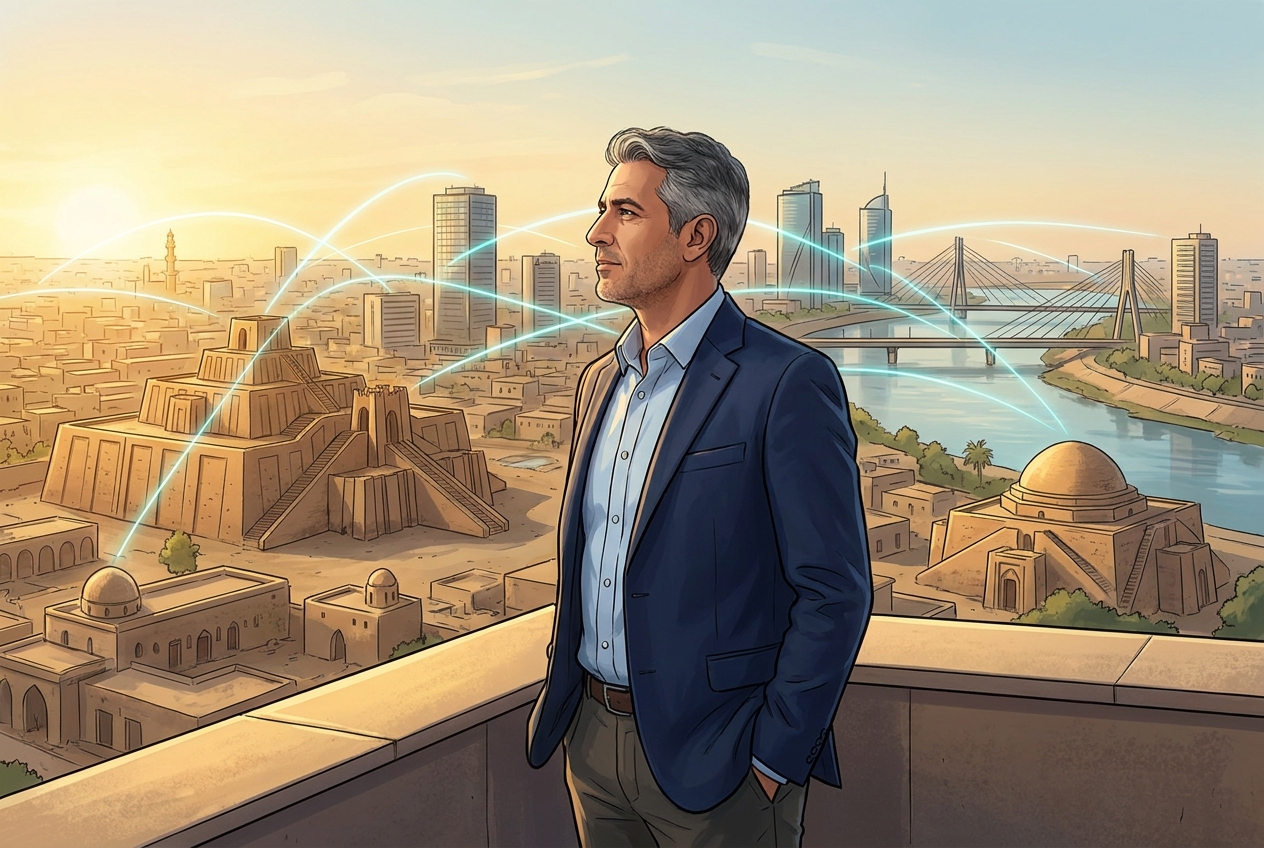
I have just returned from a business trip to Iraq. The feelings are mixed, but above all rich. Today, when I hear the word Iraq, I no longer think first of war, but of Mesopotamia, the cradle of civilization, of the Euphrates and Tigris, of Baghdad as one of the most important centers of knowledge and progress already in the 8th and 9th century. I also think of a country that was once among the most advanced in the Middle East, but today is trying to get back on its feet after decades of wars, embargoes and internal tensions.
Between the Ruins and the New Baghdad
Today's Iraq is a country of great differences. In Baghdad you can see on one side wonderful buildings, palaces, monuments and new business projects, on the other side ruins, dust, poor infrastructure and poverty that cannot be overlooked. Everything that has happened to the country in the last few decades has left consequences.
But the people I met are not people who would give up. Quite the opposite. They are extremely warm-hearted, hospitable and resourceful. I was also at their home and you very quickly feel that a guest has a special place there. They would give you everything they have. The food is excellent, full of vegetables, flavors and simple but very good combinations. I like lamb, so in Iraq I came into my own in all possible forms.
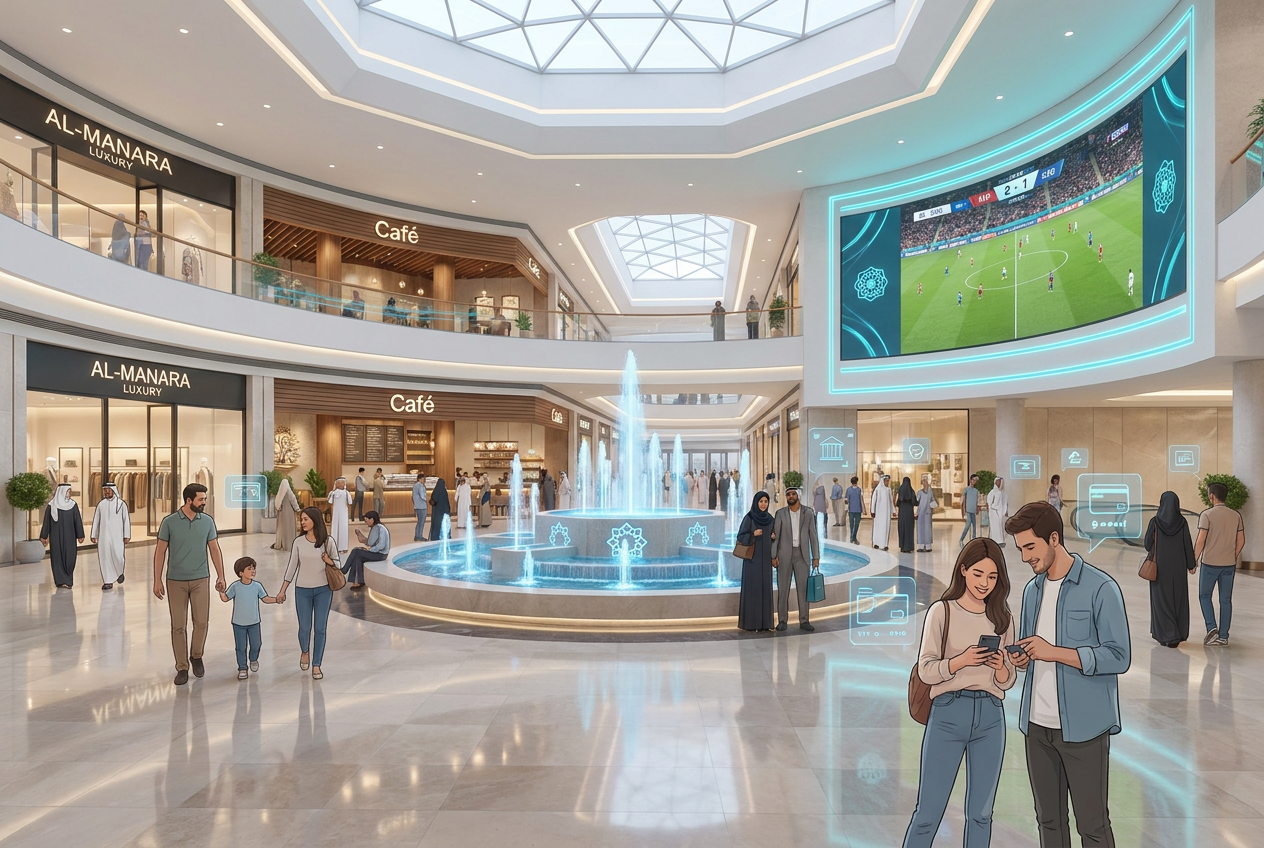
Because we also deal with solutions for shopping centers and smart destinations, I of course also looked at that part of Iraq. Iraq Mall in Baghdad can compete with large centers in the region. Following the example of Dubai Mall, it has a large water element with a dancing fountain, a large screen and an entire experience that exceeds the classic idea of a shopping center. When I was there, they were broadcasting a football match on the large screen. Then you see that even in Iraq the consumer experience is developing in a direction where shopping is no longer just shopping, but socializing, entertainment, hospitality, events and digital elements.
Digitization as an Opportunity and a Challenge
What about digitization? The answer here is the most interesting: hot and cold at the same time. On one side, years of wars and embargo have set the country back quite a bit. On the other side, Iraq today wants to make up for many things very quickly. Not slowly and cautiously, but with the ambition to skip entire development phases.
Mobile internet is one of the main drivers of this change. Due to different operator coverage, it is not unusual for people to have two phones or two cards. Wi-Fi is not hard to find, the younger generation is also much more technologically literate than many would imagine. And right here is one of the biggest opportunities for Iraq: the country has a very young population, a great need for modernization and enough financial resources for the development to take place quickly.
The main project of the country is the digitization of public administration since there is currently a huge amount of bureaucracy. In many ways it resembles Europe from twenty years ago, that is, approximately the time when more serious problems started in Iraq. The purpose of digitization is therefore not only faster service for citizens. The purpose is also more transparency, less corruption and less dependence on personal acquaintances.
I felt this also quite directly. When we had a scheduled meeting at one of the ministries in the so-called Green Zone, a larger anti-corruption operation was taking place right then. The roads were blocked, access and exit limited, the six-lane road almost empty. On the way to the ministry there was practically only our car. If we had not had special escort that opened the way for us, it would have been difficult to get to the meeting that day.
Digitization is a very sensitive topic in such an environment. For some it means faster procedures, more transparency and less corruption. For others it means the loss of the old way of operating. Therefore the biggest obstacle is not only technology. The obstacle is habits, interests, lack of trust and digital literacy of part of the population.
The Biggest Obstacle is Not Technology, but Infrastructure
The biggest obstacle to digitization is not the application, web portal or mobile phone. The biggest obstacle is electricity. Iraq has daily power outages. This means that you can have modern digital systems, 5G ambitions and young users, but if there is no stable power supply, the system stops. Therefore companies, hotels, shopping centers and government centers invest a lot in their own generators, battery systems and solar power plants.
This is an important lesson for every company that is thinking about Iraq. There the most sophisticated solution does not necessarily win. The solution that works in real conditions wins. This means reliability, local support, simple use, security, redundancy and understanding of the environment.
And here the question of investments opens. Iraq invites investments. Opportunities are large and can also be well rewarded. But the market is not easy. When I talked in Slovenia with different companies and presented them concrete needs, I felt fear in the majority. Everyone would like growth, new markets and higher revenues. But when it comes to a market that is not completely regulated, predictable and European comfortable, reluctance quickly appears. They would like earnings without risk. If someone knows such a model, please present it to me, because I would gladly use it myself.
Iraq is not a market that we should idealize. Nor is it a market that we should look at only through the prism of the past. It is a country with wounds, energy, money, young people and a great need for digital solutions that work in real life.
My conclusion is simple: Iraq wants to make up for lost time. Digitization there is not a fashionable word, but can become a tool for more trust, more transparency and faster development. For companies that know how to combine technology, local understanding and some courage, Iraq is not only a risky market. It is also one of the more interesting business opportunities that we in Europe often overlook.
Jurij Triller