The Meeting That Changed History
This story begins in 1978—an era when, for many, even owning a regular telephone felt like science fiction. No one could have imagined the technological leap the coming decades would bring. Two men stepped onto the sacred grass of Wimbledon’s Centre Court…
The stadium, painted in a deep green, was empty. A quiet tension hung in the air. As if you could feel that something historic was about to unfold.
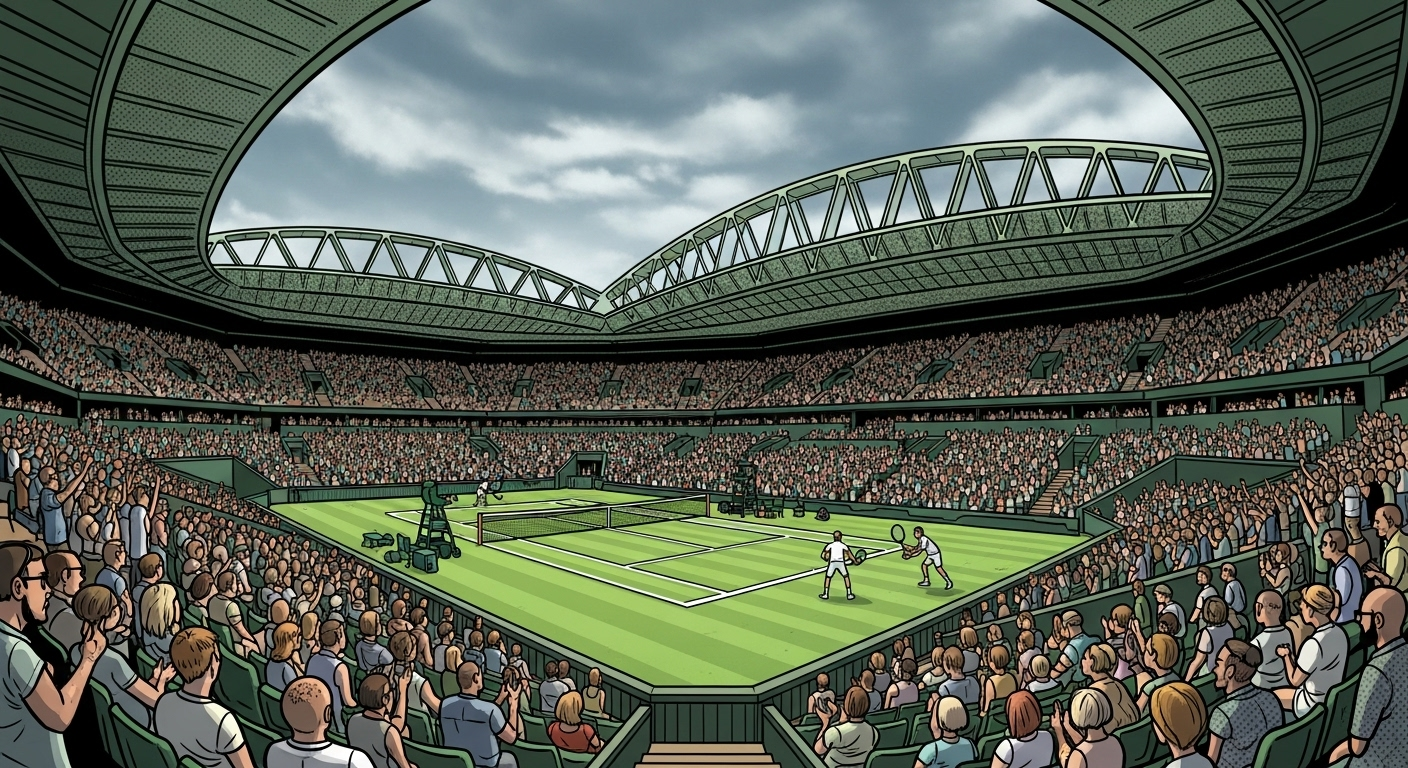
Centre Court is the crown jewel of Wimbledon—the world’s oldest tennis tournament, played on grass since 1877.
One of the visitors gestured toward the empty stands. Though he was about to present the most important offer of his life, he remained calm deep inside. The expression on the face of the other man—a titan of the watchmaking world—betrayed nothing. He resembled a poker player who never reveals his hand. Of course—revealing too much could have weakened his negotiating position.
In silence, the two men sat down in the royal box and soaked in the atmosphere: the immaculately cut grass, the timeless architecture, the heartbeat of pure elegance. Then, the influential director broke into a wide smile. And in the very next moment, the man with glasses uttered just three words:
"This is Rolex."
And so, a legendary partnership was born—one that would forever change the world of sports.
Who Were They—and Why Is Wimbledon So Special?
Who were the two men that, decades ago, visited the world’s most iconic tennis club? One was Mark McCormack, the visionary founder of sports agency IMG. The other was André Heiniger, then CEO of Rolex.
How did McCormack convince Heiniger—who was generally skeptical about advertising through sports—to make Rolex the official sponsor of the oldest tennis tournament in the world, at a time when such sponsorships were still rare?
The answer lies in Wimbledon itself—its unique tradition, woven into decades of history. Founded in 1877, Wimbledon is the oldest tennis tournament on Earth. But in 1978, it wasn’t exactly at its peak. Despite its fame, the tournament struggled with limited revenue and lower global recognition compared to events like the US Open.
McCormack knew that Heiniger, even with his reservations about sports sponsorships, wouldn't be able to resist once he experienced the atmosphere of Wimbledon’s Centre Court firsthand.
It made sense. Wimbledon stood apart from other tournaments in how it approached branding. While other venues were saturated with ads at every corner, Wimbledon remained minimalist. Only a select few sponsors were allowed in—a strategy of scarcity and elegance.
The Rolex partnership was forged at a time when prize money in sports—especially tennis—was still modest. For context: in 1978, the men’s singles champion won £19,000. This year, the winner will take home a handsome £3 million. Much of that is thanks to Mark McCormack’s vision.
You don’t need to go to extremes, but it’s essential to offer your customers something unique. Something that sets you apart. One thing matters most!
Augusta National and the Masters Tournament
Let’s stay on the grass—but turn to another sport. At Augusta National, home of the Masters Golf Tournament, the philosophy is much the same. The club was founded in 1932 in Georgia, and the tournament launched soon after. Today, it stands as the most prestigious of golf’s four major championships.
Just like Wimbledon, Augusta relies on a small number of carefully selected sponsors. On-course advertising is nearly invisible, preserving the purity of the event. Prize funds have grown over the decades just as they have in tennis.
Augusta is also legendary for its exclusivity. To illustrate how hard it is to become a member: the easiest way to join Augusta is to win the Masters. In the fiercely competitive world of golf, only a few—like Tiger Woods and Jack Nicklaus—have claimed that title multiple times.
Two Icons. One Approach.
Wimbledon and the Masters are now two of the most prestigious sporting events in the world. Both venues followed the same principle:
They didn’t chase trends.
They followed their own rules.
They stuck to their vision.
While most other venues were happy to cash every sponsorship check and became flooded with ads, Wimbledon and Augusta stayed true to their strategy: Minimalism. Elegance. Tradition.
Many doubted them back then. But today, we know they were right.
You don’t need to go to extremes—but you do need to offer something unique. Something that sets you apart.
There’s one core lesson in the McCormack–Rolex story: The founder of what became the world’s most powerful sports agency closed a deal (that still stands today) because the Rolex director immediately connected with the identity and message of Wimbledon.
You don’t have to chase perfection like Wimbledon or Augusta. But you must offer something *special*—a service, experience, or value that customers can emotionally identify with.
Because if they do,
they’ll come back to you—again and again.
Boštjan Belčič
Connect with me