Do your customers forget about you during the holidays? (And how to prevent it)
Do your customers forget about you during the holidays? (And how to prevent it)
Where do your sales and data actually vanish to in July? July is here, bringing along that quiet, dangerous consensus in the world of marketing and sales: "Offices are empty, cities are deserted, everyone is at the beach. It’s time to shut down the engines, cut the budgets, and wait for the autumn rush."
This mindset is one of the biggest and most wasteful mistakes in modern business. When companies voluntarily switch to hibernation mode, they aren't just losing immediate revenue — they are losing something far more valuable: continuous customer engagement and control over their data.
The truth is completely different. Customers don't stop spending during the summer. Their financial habits don’t go on vacation; they simply transform. They move away from couches, office chairs, and desktop computers into the real world — to travels, tourist destinations, summer festivals, and pop-up locations. The sales rhythm doesn't stop; it just moves out into the field.
And this is exactly where a critical, often fatal gap opens up for most brands. When a customer closes their laptop and walks through the door of a physical location, all traces of their behavior too often vanish with them. A so-called "digital blackout" occurs.
The open-system trap and the loss of digital sovereignty
Why do most businesses feel the summer shift as a drop in revenue? Because they rely on outdated, open payment systems. When a customer pulls a traditional bank card out of their pocket at a summer venue or store, you, as a business, only see a dry, anonymous transaction amount. Who is this customer? Is this their first summer experience with you? Will they return? What actually brought them in?
You are voluntarily handing over all these crucial answers and invaluable behavioral data to banks and third-party financial intermediaries. By doing so, you aren't just losing insight — you are directly undermining your digital sovereignty. Instead of building your own customer knowledge base, you are feeding someone else's network.
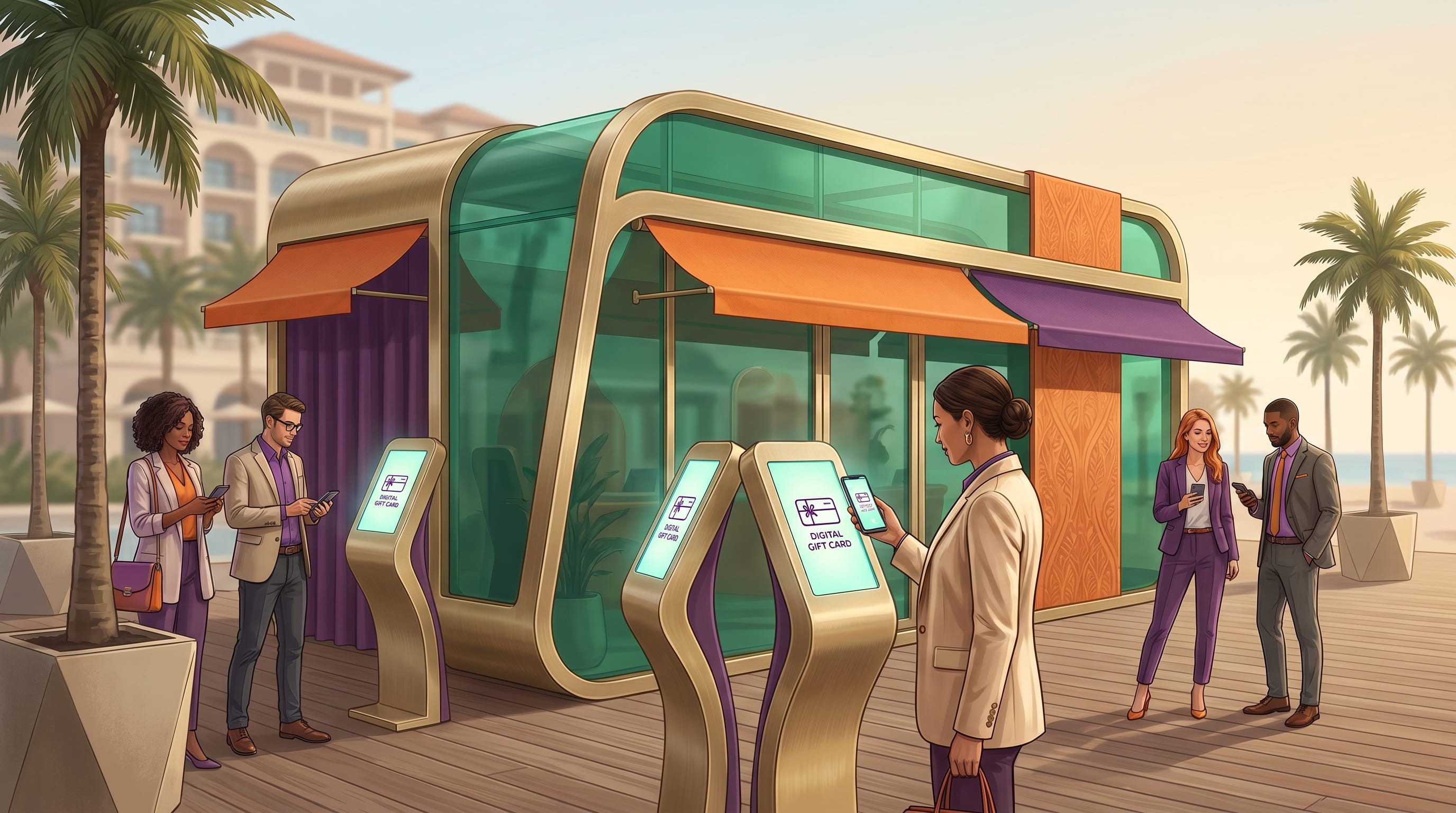
The "phygital" transition: Summer winners blur the boundaries
Market-dominating companies don't view summer as a dry season, but rather as the ideal testing ground for implementing a "phygital" strategy — the seamless blending of the digital and physical worlds. Today's customer no longer distinguishes between buying online and buying in-store; to them, it’s one and the same brand. The transition when a customer puts their phone in their pocket and steps up to your sales counter must be entirely frictionless.
With SmartGifty’s closed-loop gift card systems and advanced digital vouchers, you turn the rules of the game in your favor. The entire ecosystem of revenue and information remains locked inside your own house:
Complete traceability in the field: Even when customers are on vacation or on the go, you know exactly how and where they are interacting with you. Every digital voucher redeemed at a summer location tells you the customer's full story in real time.
A financial closed loop: Money loaded onto your system is securely tied to your brand. It cannot bleed out to the competition. The customer will redeem it with you — whether in July at the beach or in September upon returning to the office.
Data as fuel for autumn: The data you gather during the summer dynamic, while the competition is asleep, is a goldmine. It allows you to launch autumn campaigns with precisely segmented, hyper-personalized offers, instead of guessing and shooting in the dark.
Take control while others wait
Summer, therefore, is not a time to retreat and passively wait for more favorable months. It is a strategic moment to remove the barriers between the screen and the retail shelf, keep cash flow within your ecosystem, and offer customers a premium, connected experience — no matter where they currently are.
Don't let your data and revenue drift away into the unknown this summer. It’s time to take full control of your sales ecosystem.