
How Can Malls Effectively Link Digital Users to Physical Stores?
If you’ve spent five minutes on "Retail LinkedIn," you’ve likely seen his face. Reinhard Winiwarter is more than just a well-connected publisher. He is the architect of Across Magazine , a consultant for major European real estate projects, the host of Vienna’s "Drinks Before Home" (DBH) series, and a fourth-generation winemaker. We sat down with him to discuss how the industry has shifted since 2008 and why the future of the shopping mall depends on the very tools we build here at SmartGifty .
Reinhard, your LinkedIn presence is legendary. It’s hard to find a retail professional worldwide you aren’t connected with. How do you build a network of this magnitude?
The core of it is time and consequence. I started this journey with Across Magazine in 2008. It wasn't a sudden burst; it’s been a steady process of gaining three to four new followers every single day for years.
But numbers aren't everything. You must have a critical eye. If your followers come from random industries with nothing to exchange, the network has no value. Success comes from a clear, defined target group in relevant, connected industries. That is how you build a lively community rather than just a list of names.
Beyond the networking, you have a very colorful background. You’re a Viennese consultant and a publisher, but you also run a winery?
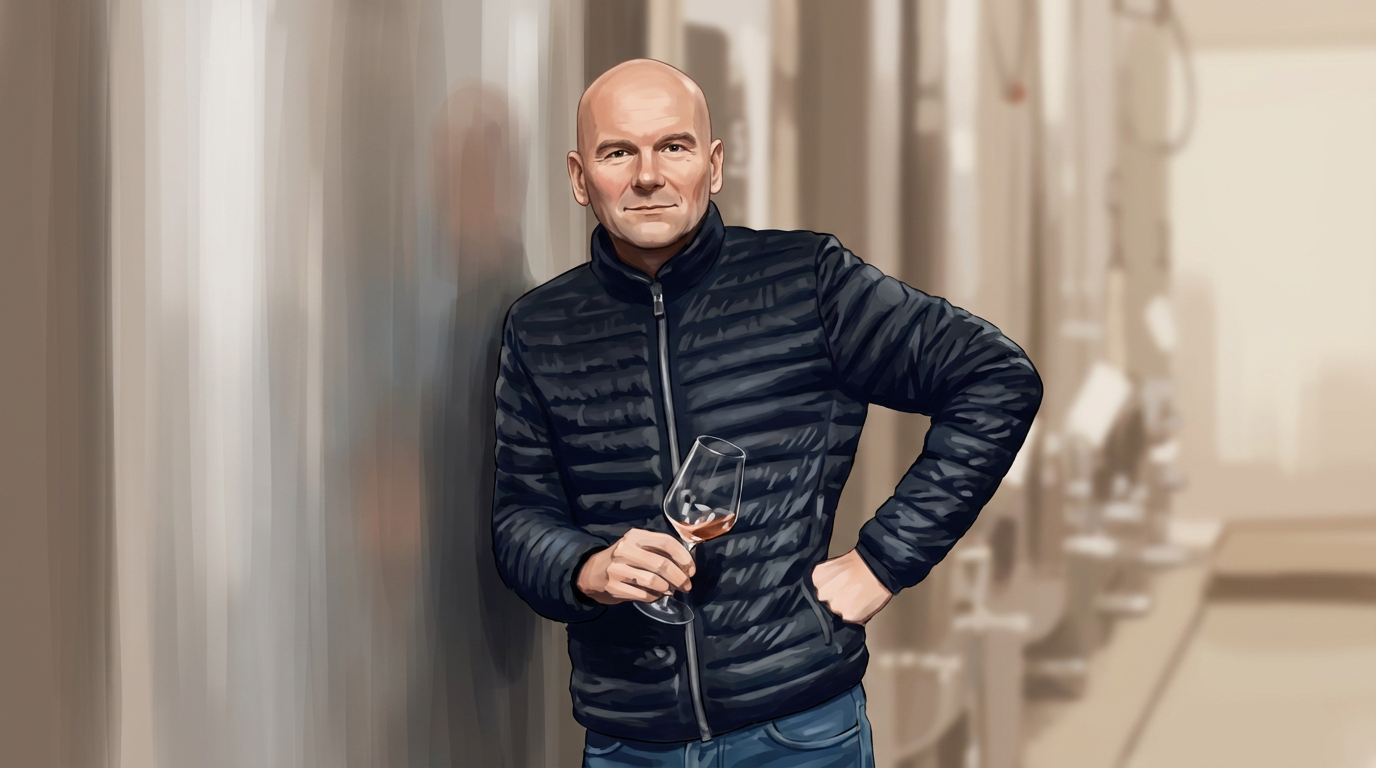
Yes, it’s my family heritage. My parents handed over our winery in Krems an der Donau, right on the Danube River. I’m the fourth generation to run it. We have 10 hectares where we produce about 50,000 bottles a year, mainly Grüner Veltliner. It’s a great honor to keep that tradition alive while managing the fast-paced world of retail real estate.
You launched Across in 2008 when print was still the dominant force. How has the media environment changed for you since then?
To put it in a nutshell: everything changed. In 2008, a print magazine was the only way. Today, we’ve built a complex digital vehicle—newsletters, e-papers, webinars, and master classes. While I’m proud that we still maintain 20,000 print subscribers, the real growth is online. The industry itself has also become more complex. In 2008, it was just developers, operators, and tenants. Now, we have PropTech, sustainability experts, and a dozen other sub-sectors that didn't exist back then.
You have a bird’s-eye view of the continent. Are European shopping centers becoming more alike, or are the regional differences still sharp?
Europe is a complex vehicle of at least 40 different markets, each at a different stage. The landscapes are very different—for example, in the Balkans (Albania, Bosnia, Macedonia), you see a massive presence of Turkish brands that you won't find in Austria or Switzerland.
However, the consumer side is synchronizing. Whether in Bosnia or Sweden, consumers follow the same global trends driven by social media. The brands might differ, but the desires are the same.
We often hear "black forecasts" about the death of the shopping mall. What is your take on the "online vs. physical" reality?
There will always be a need for physical retail. Twenty years ago, we had one or two distribution channels. Today, a perfect retailer must play perfectly across many channels.
What we are seeing now is a polarization process. The "good" malls—the flagships with great offers—will only get better. The struggle is in the middle sector and smaller malls because, frankly, we have too much space. The future isn't the death of the the mall; it’s the concentration of quality.
That leads us to what we do here at SmartGifty. As you know, gift cards and loyalty systems are our core focus. How do you see these tools evolving?
I see this sector as vital. The tools you are developing at SmartGifty are going to have a growing importance because they are the "glue." They are necessary to connect people and link them to a physical space.
As you see in your company every day, a gift card is no longer just a gift card—it’s a sophisticated marketing tool. It must be a fixed part of a mall’s marketing mix. Software is just software unless there is a strategy behind it to convince a person to step out of the digital world and into the center. From my point of view, these loyalty systems are the bridge to the future of the industry.
Reinhard Winiwarter